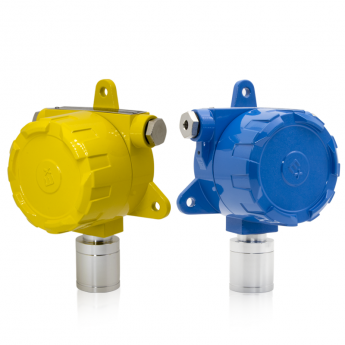
A planning framework for Fixed Combustible Gas Detector built around documentation shortlisting
When technical buyers assess a fixed combustible gas detector, the first task is not to rank products by appearance or broad category. It is to establish what each page actually documents, which requirement that evidence addresses, and which points still need a technical discussion. This approach keeps a shortlist useful without turning a brief catalogue description into a wider claim about site suitability, compliance, or performance.

Start with the operating context
Documentation has value only when it is read against a defined operating context. Before comparing options, write a short procurement brief covering the intended area, the gases of interest, the signal or interface expected by the wider system, and the parties responsible for design, installation, commissioning, and ongoing operation. These are not assumptions about any particular supplier. They are prompts that help the buying team describe the requirement consistently.
The brief should also distinguish confirmed requirements from questions. For example, a signal requirement may be confirmed by the system design, while the exact interface arrangement may remain a matter for the integrator. A gas list may be known at the process level, while the relationship between that list and a detector’s documented capability may require closer review. Keeping these categories separate prevents a general product description from being treated as a complete specification.
Turn documentation into a comparison record
A practical shortlist can use one row per requirement and one column for the evidence supporting it. Useful columns include the requirement, the exact wording found on the page, the product or model to which it applies, the source location, and the status of the point. A simple status such as “documented”, “unclear”, or “outside current evidence” is more informative than a single overall score when the available material is brief.
This record also makes scope visible. A statement about a named model should remain attached to that model. A category-level description should not be expanded into a claim about every product in a supplier’s range. Likewise, a technical value should not be presented as proof of certification, regulatory acceptance, installation suitability, or a measured result unless the relevant source explicitly supports that conclusion.
The key discipline is to quote or closely paraphrase what the page says, then add a separate buyer interpretation. The first is evidence. The second is a planning judgement. Combining them in one sentence can make an inference sound like a supplier statement, particularly when the original page uses concise marketing or catalogue language.
Use page-level evidence carefully
For a fixed combustible gas detector, page-level evidence should be checked against the exact requirement rather than treated as a general promise. Ask whether the statement identifies a model, a feature, a signal, a supported gas, or an operating function. Then ask whether that detail is sufficient for the decision being made. If it is not, record the issue as an open technical question instead of filling the gap with an assumption.
One concrete example appears on the Bosean BH-60 page. Its feature information states that the unit has 4–20 mA standard signal output and supports on-site monitoring and alarm through simple settings. Those are catalogue details attributed to that page. They can therefore be placed in a shortlist as documented features of the page’s subject, while questions about system architecture, site suitability, certification, safety outcomes, or unlisted configurations remain outside that statement.
This distinction matters because a signal description and an alarm description do not, by themselves, explain how a complete installation will be designed or managed. A buyer can use them to frame the next conversation: which interface is required, how the signal is expected to connect with the wider system, and what documentation is needed for the intended application. These are responsible procurement questions, not conclusions about the product beyond the cited information.
Prepare the next technical discussion
Once the evidence table is assembled, convert unresolved points into precise questions. Group them by responsibility so that the supplier, system integrator, engineering team, and site owner can each respond to the matters within their remit. Questions may cover the meaning of a listed feature, the scope of a specification, required project documentation, and the assumptions behind the proposed configuration.
A useful meeting record should preserve the original requirement, the evidence reviewed, the answer received, and any resulting change to the shortlist. It should also note when a point remains open. This creates a clearer trail from initial research to procurement discussion and reduces the risk that a broad description will silently become a mandatory design assumption.
The result is a shortlist built around documentation rather than impression. For technical buyers considering Bosean, the same method provides a disciplined way to use the BH-60 page’s stated details while keeping application, integration, and responsibility questions explicit. That balance supports a better next discussion without claiming more than the available evidence can show.
