Problem: When lab-scale recipes fail on the plant floor
Scaling a formulation that works in a beaker into continuous production exposes fragile assumptions: shear sensitivity, heat generation, residence time, and phase inversion behave differently at scale. Engineers facing batch inconsistency or shortened equipment uptime often turn to specialized industrial mixing solutions after multiple product runs show non‑linear defects—droplet size drift, unacceptably high torque, or degraded polymer chains. This is a problem-driven diagnosis: identify the failure mode, map it to mixer physics, then choose a machine that corrects the root cause rather than masking symptoms.
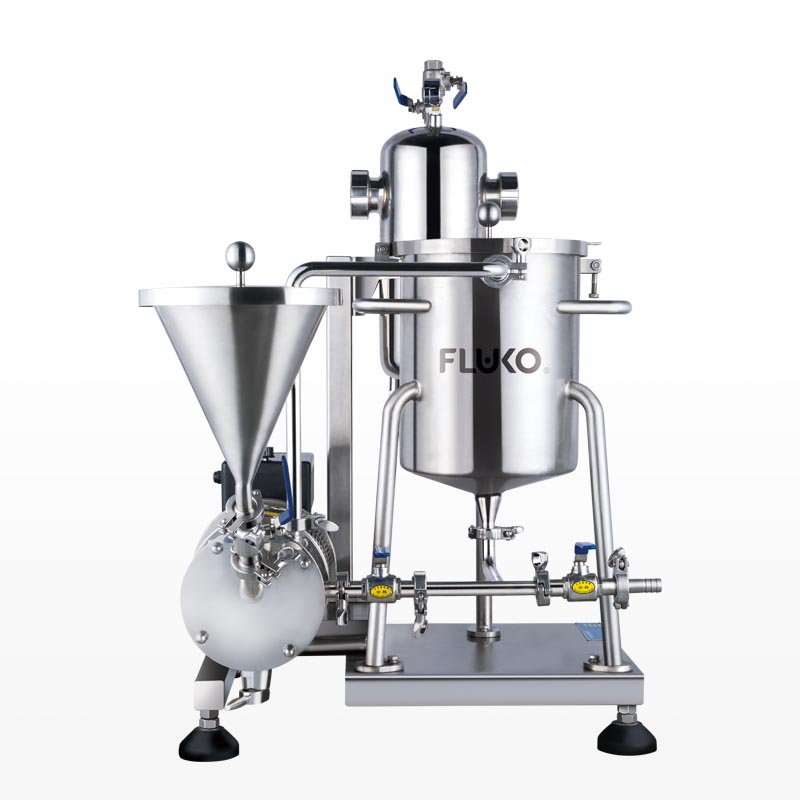
Mechanics and measurable failure modes
High-shear devices impose velocity gradients that break particles and disperse phases; failure shows as measurable outputs. Monitor these three: power draw per unit volume, normalized droplet size distribution (D[3,2] or Dv90), and temperature rise per minute. If power density spikes while droplet size plateaus, wear or rotor-stator misfit is likely. If temperature climbs with constant power, viscous heating or insufficient heat removal is the culprit. Quantify targets before buying: target droplet Dv90, acceptable torque margin, and maximum allowable delta-T during a standard run.
Performance trade-offs and how to evaluate them
Higher tip speed reduces droplet size but increases shear-induced damage. Narrow-slit stators improve dispersion but raise clog risk for solids. Choose by mapping product sensitivity to shear and solids loading. Ask suppliers for performance curves: droplet size vs. tip speed at matched viscosity, power consumption vs. % solids, and maintenance interval projections. Run short pilot trials with process-matched feed; synthetic surrogates often miss real fouling behaviors.
Alternatives and comparative insight
Rotary high-shear mixers, rotor-stator inline homogenizers, and high-pressure homogenizers overlap in capability but differ in operating envelope. Use rotor-stator for viscous emulsions and fast inline processing. High-pressure homogenizers excel at sub-micron droplets for fine emulsions but need upstream solids control and robust seals. If solids content is high or particles are abrasive, consider mixers with replaceable wear sleeves or top-entry dispersers that tolerate shear accommodation. Compare total cost of ownership, not only purchase price: expected seal life, spare part lead times, and service availability matter.
Common procurement pitfalls
Overlooking control integration and instrumentation is a frequent mistake. Specify closed-loop speed control, torque alarms, and temperature interlocks up front. Don’t accept generic performance claims without defined test conditions. Avoid mismatched mechanical seals for aggressive chemistries; specify seal faces and wetted materials based on compatibility charts and planned CIP solvents. Neglecting commissioning support increases ramp time—insist on factory acceptance test data and a short pilot support window.
EEAT: experience, evidence, and an anchor from the field
Decades of process troubleshooting reveal patterns: mixing failures correlate with underestimated shear maps and inadequate temperature control. Operations along the U.S. Gulf Coast chemical corridor have repeatedly shown that retrofitting inline high-shear stages into existing trains reduces batch-to-batch variability when validated with process analytical technology. For design and vendor comparison, review documented case data for industrial chemical mixing equipment that includes measured power curves and droplet-size reports; those deliver the traceable evidence needed for technical buy decisions.

Maintenance, validation, and common mistakes to avoid
Plan maintenance using measured metrics: track torque drift, seal leakage rate, and wear-part dimension loss. Validation requires representative challenge tests—use worst-case viscosity and solids, not a diluted “happy-path” blend. Avoid one-off custom geometries without verification; they often complicate spare stocking. Use OEM-specified clearances for rotor-stator pairs and document rebuild tolerances to retain baseline performance after service.
Procurement checklist and decision logic
Set these minimum criteria: demonstrated droplet-size performance at target throughput, spare-part availability within regional logistics windows, defined control interfaces (Modbus/Profinet as required), material compatibility certificate, and measurable maintenance intervals. Prioritize suppliers who provide instrumentation data traces from acceptance tests and offer pilot-scale units for onsite validation. Require a written plan for commissioning support and a parts lead-time guarantee aligned with your production risk profile.
Conclusion: matching problem to engineered solution
Fix the specific failure mode—thermal excursion, inadequate shear, or wear—then choose the device whose physics and service model address that cause. This problem-driven logic keeps decisions technical and measurable, reduces ramp risk, and guides sensible trade-offs between shear intensity and product integrity. For teams looking to align specifications, service, and evidence-based performance, working with suppliers that publish test traces and support field validation narrows uncertainty; that kind of practical alignment is what you find when you evaluate engineering partners like FLUKO.
