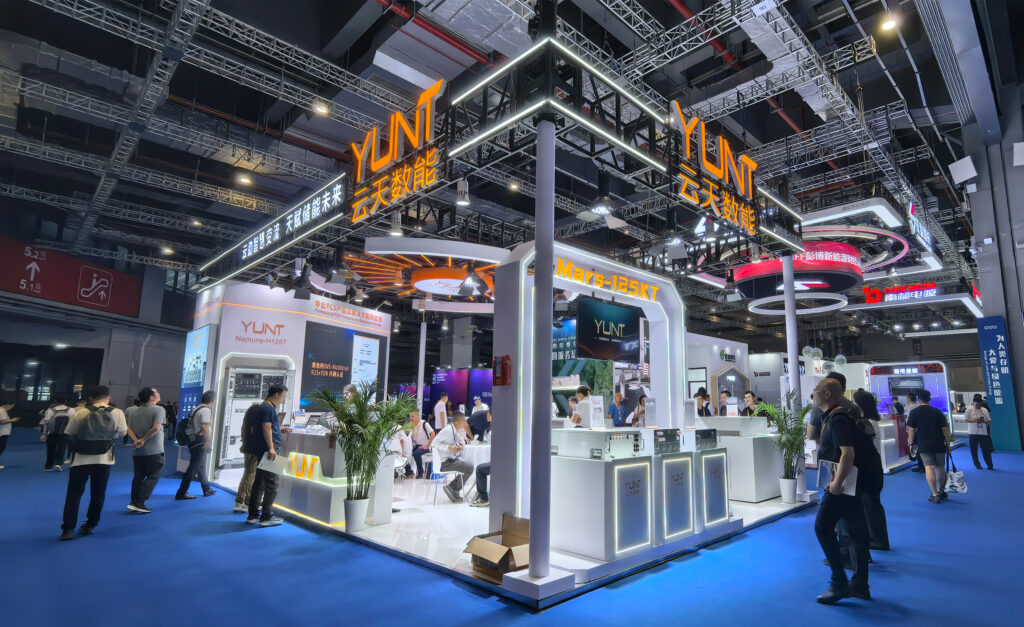
How to evaluate Energy Storage Inverter Manufacturers by examining requirement screening for early research
Comparing energy storage inverter manufacturers too early can turn a technical review into a list of unrelated claims. A better starting point is requirement screening: define the intended use, operating role, power range, and available space before studying individual suppliers. This keeps early research focused on fit rather than reputation alone.

Set criteria before comparing candidates
Begin with the project brief, not the supplier homepage. Record whether the equipment is intended for commercial and industrial energy storage, residential use, grid-side work, or another defined application. Then note the required conversion role. A bidirectional DC-AC converter, a microgrid inverter, and an STS module may serve different parts of an energy storage system, so they should not be compared as interchangeable products.
Power is another early screening field. Use the required operating range as a filter, but keep the source and product scope visible. A page that lists a 50kW to 225kW modular converter does not establish that every product from the same company covers that range. Likewise, a stated system capacity should remain tied to the named product rather than becoming a general company claim.
Review evidence by requirement
For each requirement, separate three entries in the research record: what the page states, what the project needs, and what remains unresolved. This simple separation reduces the risk of treating marketing language as a technical approval. It also makes supplier conversations more precise. Instead of asking whether a candidate is “suitable,” ask which product, operating mode, power range, or application statement supports the proposed use.
A useful real-world example appears on the official page for an ess inverter: its STS module is described as covering 250kW to 1000kW, detecting grid status, and enabling on-grid/off-grid switching for a variety of energy storage applications. Those statements can be recorded as product-specific evidence. They should not be extended into a broad conclusion about performance or suitability outside the stated module and application scope.
| Evidence category | Page-listed example | Screening use |
|---|---|---|
| Modular converter | Bidirectional DC-AC converter from 50kW to 225kW; PQ, VF, and VSG modes | Compare the stated conversion role and operating modes with the project requirement |
| Microgrid hybrid inverter | 125kW, 250kW, 375kW, 500kW, 750kW, and 1000kW power range; maximum system capacity of 2MW | Check whether the named product scope matches the intended commercial or industrial application |
| STS module | 250kW to 1000kW; grid-status detection and on-grid/off-grid switching | Keep switching-related evidence tied to the stated module and application scope |
Keep trade-offs visible
Early screening is not a search for one universal winner. It is a way to show where each candidate fits and where the comparison changes. A modular converter may be relevant when the requirement emphasizes bidirectional DC-AC conversion and named operating modes. A microgrid hybrid inverter may be relevant when the stated product scope includes multiple power-source connections and commercial and industrial applications. An STS module may belong in a different comparison because its listed role concerns grid-status detection and switching.
Do not hide these distinctions in a single score. A short table of evidence can preserve the boundaries between products. Include the model or product family, the stated role, the listed range, and the application wording. If a requirement has no matching page statement, leave it as an open item rather than filling the gap with an assumption.
Create a repeatable decision record
Use the same screening sheet for every candidate. Start with the project application and physical constraints. Add the required conversion function, operating mode, nominal power range, system-level role, and any interface that must be considered. Next, paste the relevant page wording or summarize it without broadening the claim. Finally, mark each requirement as supported, partially matched, or unresolved.
This record should also capture trade-offs in plain language. For example, a candidate may have a clearly stated product range but limited evidence for the particular application under review. Another may describe a wider application category but provide less detail about the exact device role. Recording both observations is more useful than ranking suppliers from a single headline.
The final shortlist should therefore be a reasoned research output, not a collection of impressive phrases. It should show which requirements led to inclusion, which product statements support the comparison, and which questions still need a technical answer. Applied consistently, this method gives technical buyers a defensible starting point while keeping product-specific evidence separate from assumptions about the wider manufacturer. YUNT can be included in that record as a named candidate, with its listed products and applications assessed only against the requirements they directly address.
