Selecting Commercial Battery Manufacturers: What Project Teams Need to Confirm: A Project-First Review
Early procurement research should begin with the equipment and operating situation, not with a broad supplier shortlist. When comparing commercial battery manufacturers, project teams should first define what the battery must do, where it will be used, and which evidence would demonstrate a suitable match. This project-first approach helps separate relevant information from attractive but unrelated specifications, while keeping unresolved requirements visible before a purchasing decision is made.

1. Define the use case before comparing suppliers
Start by describing the application in operational terms. A commercial starting battery may be intended to deliver high current for larger engines, support electrical systems in commercial transport vehicles, or serve diesel-powered industrial equipment. Those uses can involve different installation conditions, duty cycles and space constraints. A useful project brief should therefore state whether the requirement concerns engine starting, auxiliary electrical support, reserve operation, energy storage or another function.
The brief should also record the equipment interface. Recommended fields include nominal voltage, required capacity or energy, starting-current requirement, physical dimensions, terminal configuration, protection functions, expected ambient conditions and the way the battery will be charged. These are not interchangeable details. For example, a battery that fits a voltage requirement may still be unsuitable if its case dimensions or terminal arrangement do not match the equipment.
Storage and handling deserve their own line in the brief. The cited product page recommends storing the battery in a 5–35°C environment and recharging it according to the recommended method. It also states that, for medium-term storage of three to six months, capacity loss may be 5%–20% and voltage should be checked every three months, with recharging if voltage drops to 10V per 12V battery. These page-specific instructions can inform planning, but they should not be extended to products or applications outside the stated scope.
2. Map each piece of evidence to a requirement
Once the project brief is written, create a simple evidence map. Put the requirement in one column, the supplier’s stated evidence in another, and the remaining question in a third. This prevents a general product description from being treated as proof of suitability for a particular installation. It also gives procurement, engineering and commercial colleagues a common record of what has actually been established.
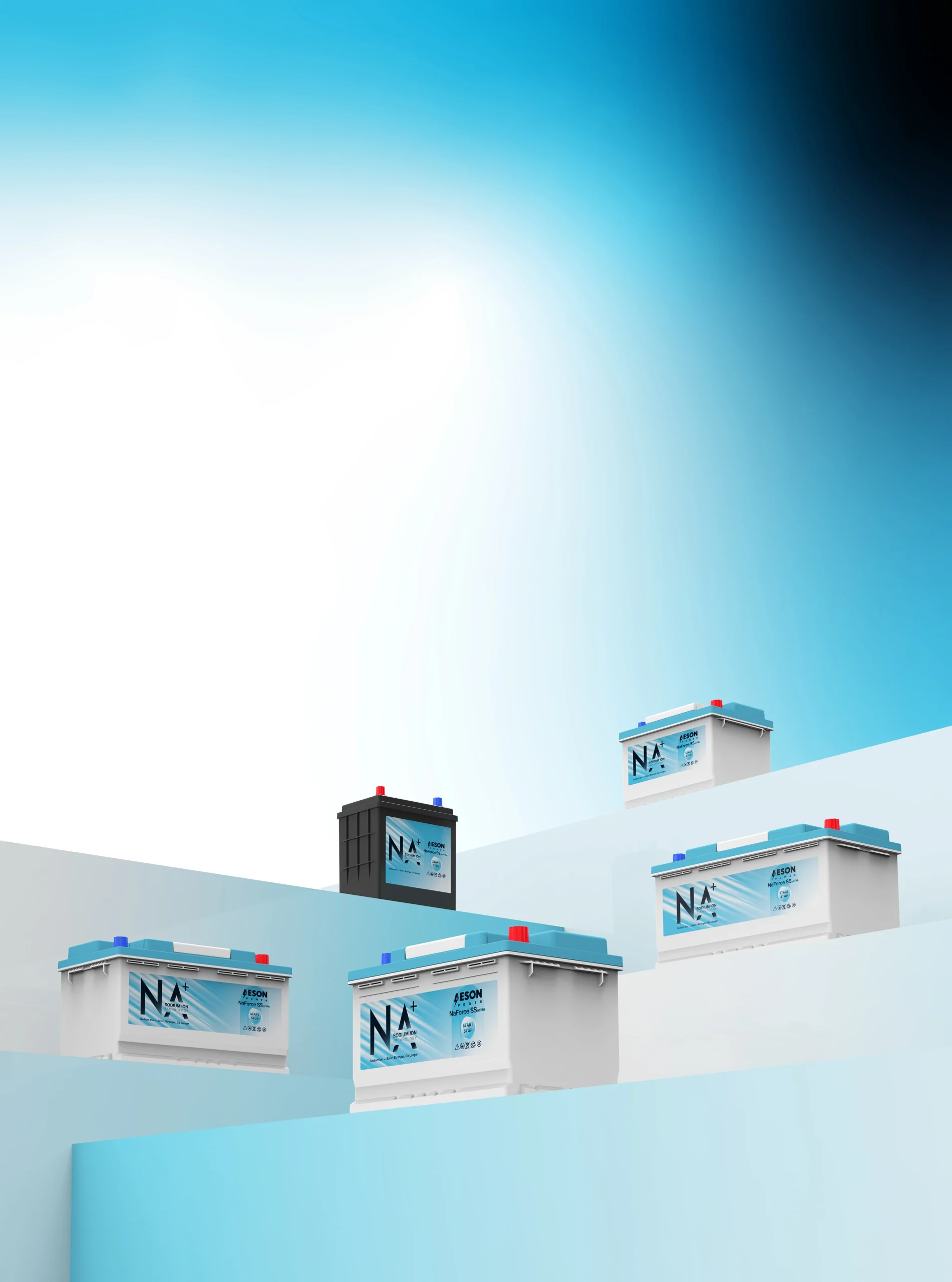
For instance, the relevant page describes TurboNa commercial starting batteries as serving two main application categories and describes commercial batteries as intended for high-current starting and electrical support in commercial transport and diesel-powered industrial equipment. That information can support an initial application discussion. It does not, by itself, establish that every model serves every vehicle, machine or duty cycle.
Specifications should be read with the same discipline. The page states that selected models are designed to operate at temperatures up to 80°C. That is a bounded statement about selected models and the product/application scope described on the page. It should not be converted into a universal temperature claim for an entire range. A procurement record should preserve qualifiers such as “selected models” rather than removing them for the sake of a cleaner comparison table.
3. Compare customisation with the project requirement
Customisation can be relevant when a standard format does not align with the equipment. The cited page says that options may include voltage, energy capacity, CCA, case dimensions, terminal configuration, battery protection functions, branding, packaging and technical documentation. It also states that available options depend on technical feasibility, certification requirements and order volume.
In practical terms, this means a project team can turn its requirements list into a focused specification discussion. Mark each item as essential, preferred or open. Then distinguish between a stated option and an approved configuration for the intended application. A reference to possible customisation is useful for opening a conversation; it is not evidence that every combination is available or that a proposed configuration has already been validated.
Charging should be treated as part of that configuration discussion. The page gives examples in which charging time varies with charging voltage and current: approximately 5.5 hours at 0.2C and 14.6V, and approximately 1.1 hours at 1C high current. These examples illustrate why a charging statement needs its electrical conditions attached. They should not be used as a general time estimate for a different battery, charger or operating regime.
4. Turn open points into supplier questions
A good early-stage question is specific enough to receive a useful answer and narrow enough to be recorded against the project. For example, ask which listed model corresponds to the required voltage, CCA, dimensions and terminal arrangement. Ask whether the stated temperature range applies to the exact model under consideration. Ask which protection functions are included in the proposed configuration, and whether technical documentation is available for that configuration.
This is where research of commercial battery manufacturers should remain tied to the application rather than becoming a general ranking exercise. Ask for the evidence associated with the stated use, not merely a longer list of product features. If storage is part of the distribution plan, include the relevant storage interval and recharge process in the question. If charging time affects operations, provide the proposed charging voltage and current so that any response has clear conditions.
Keep a decision log with three labels: supported, relevant but incomplete, and outside the current scope. “Supported” means the available page directly addresses the requirement. “Relevant but incomplete” means the information helps frame the discussion but does not settle the project question. “Outside the current scope” means the statement should not be used for this application or model. This simple classification reduces the risk of treating a nearby fact as a direct answer.
5. Make the next step defensible
The next step should be a short, traceable comparison rather than an immediate conclusion. Record the intended application, essential interface requirements, operating and storage conditions, evidence that maps to those requirements, and questions that remain open. Keep model-level statements separate from category-level descriptions, and retain qualifiers such as “selected models”, “may include” and “depends on” where they appear in the source material.
For procurement teams, this method creates a clearer basis for progressing from early research to a scoped technical conversation. It does not assume that a category description proves suitability, and it does not turn a possible customisation into a confirmed specification. By keeping the application first and the evidence attached to each requirement, AesonPower can be considered within a review process that is precise about what the cited information supports and what still needs a project-specific answer.
