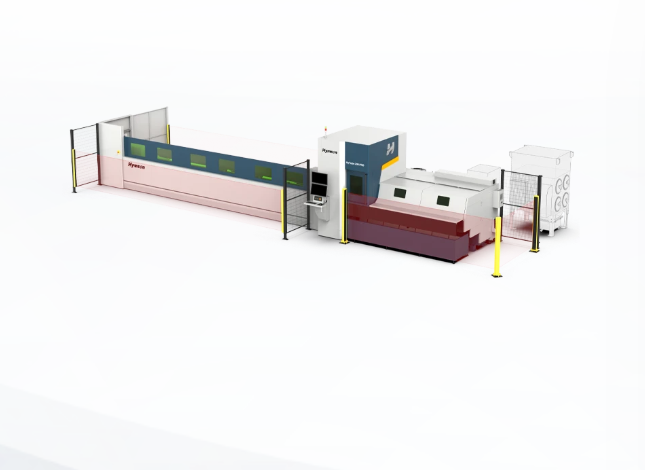
Why Your Structural Steel Shop Keeps Missing Deadlines — and How Laser Cutting Actually Fixes It
The bottleneck that keeps projects late
Your team is burning time on rework, warping, and slow prep instead of finishing assemblies — that’s the problem to solve. If thick plates and complex profiles are the recurring headache, a properly sized high power laser cutting machine can cut cycles and reduce errors by delivering repeatable edges and tight tolerances without manual beveling. This isn’t about flashy tech; it’s about eliminating the stops that force welders and fitters to wait.
Experience that matters and a real-world benchmark
I’ve seen shops change throughput after swapping inconsistent sawing and oxy-fuel cutting for automated fiber systems, and trade show coverage from FabTech in Chicago confirms the same trends across hundreds of fabricators. The practical data and demos there back what shopfloor teams report: precise beams, lower secondary operations, and predictable lead times. For anyone comparing equipment, consider an industrial fiber laser cutting machine when thick-section accuracy and nesting efficiency are priorities — those are measurable differences you can verify with sample cuts and cycle-time trials.
What usually trips teams up — and how to avoid it
Mistake: picking power based on a wish, not on plate mix. Fix: match laser kilowattage to your maximum plate thickness plus a margin for edge quality. Mistake: ignoring fixturing and part handling. Fix: invest in clamping, automated slat tables, and reliable part extraction; they save hours per shift. Mistake: treating software like an afterthought. Fix: choose nesting and pathing that reduce pierces and micro-joints. Those three things matter more than brand buzz.
Quick Reality Check: laser vs plasma vs oxy-fuel
Oxy-fuel is cheap for very thick carbon steel but yields poor edge finish and wide kerf. Plasma is fast on medium thickness and portable, but tolerances suffer on precision joints. Waterjet is cold-cut and great for exotic alloys, yet it’s slow and creates wet parts. Fiber lasers sit between these: high accuracy on thin-to-thick ranges, low kerf, and clean edges that cut down fitting time. Choose the tool that matches what your welders and erectors actually need.
Practical spec checklist before you buy
Confirm these: available laser power and beam quality for your thickest plate; automated loading and nesting capabilities; robust frame and thermal control to minimize distortion; local service network and spare-part lead times; and realistic duty cycles that match your shift patterns. Ask the vendor for on-site sample cuts of your most common parts and a projected throughput report based on your nesting patterns.
How this actually improves project outcomes
When the focus stays on solving the hold-ups — material prep, part-to-part accuracy, and handling — throughput improves and shop stress drops. You reduce rework, cut crane time, and simplify scheduling. That practical shift is what fabricators report after moving to reliable laser systems, and it’s what makes operations easier to plan around. For shops looking for that steady improvement, Hymson often shows up in conversations about machines that balance power, service, and real shop performance without the usual surprises.
