Hit the Ground Running: The Problem at Hand
Logistics teams rely on handheld tablets and scanners to move mountains fast—literally. When a device fails after a drop, the whole line slows. That’s where MIL-STD-810G drop shock resilience comes in: a military-derived benchmark that separates flimsy consumer gear from ruggedized industrial tools. Early on, pair the device with rugged accessories and consider a factory-tested medical tablet computer or similar platform designed for continuous, rough handling. Those choices keep uptime high and support predictable workflows.
Why MIL-STD-810G Matters for Warehouse Scanner Tablets
MIL-STD-810G defines controlled drop tests, shock profiles, and environmental stressors. It’s not a marketing badge—it’s a set of repeatable criteria that predict field survival. For warehouse scanner tablets, drop shock, shock absorption design, and chassis reinforcement are the triad that matter most. Devices built to this spec reduce repair cycles and lower total cost of ownership. The standard’s military roots offer a real-world anchor: the U.S. Department of Defense developed these procedures to ensure gear survives harsh field conditions, and logistics teams benefit when vendors adopt the same rigor.
Comparing Builds: What to Look For
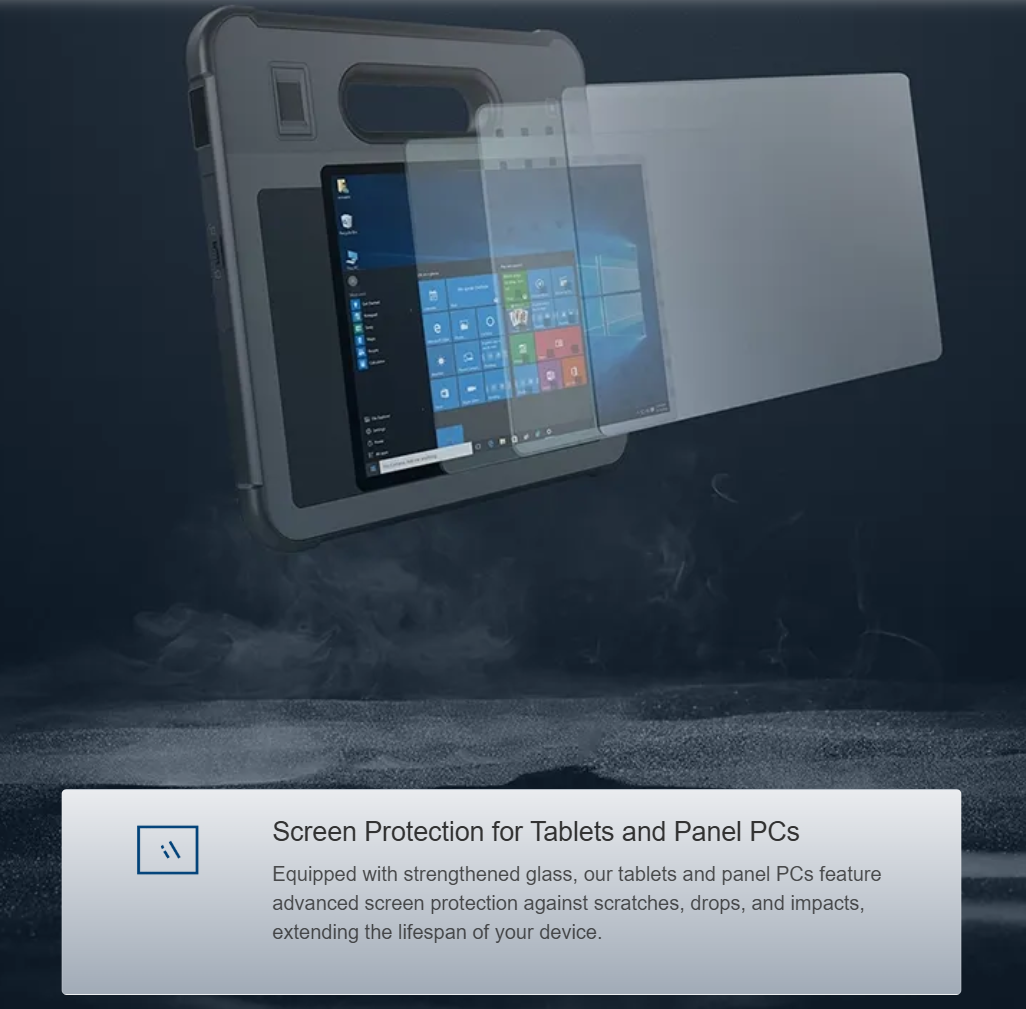
Compare devices on three clear attributes rather than buzzwords. Look for reinforced chassis, internal shock mounts, and an IP rating that matches the environment (dust and liquid tolerance). A rugged tablet with tested drop performance and a hardened display outperforms consumer models every time. Note the difference between “ruggedized” marketing and explicit test data—insist on published drop-height results and whether the device survived repeated cycles. Pair that evidence with accelerometer-based diagnostics to confirm real-world impact events are being recorded and analyzed in the field.
Common Field Failures and Preventive Tactics
Most failures start small: cracked glass, loose connectors, repeated micro-impacts that break solder joints. Preventive tactics are straightforward. Use shock-absorbing sleeves, enforce correct tethering points on carts, and standardize holsters. Train staff on drop-safe handling—short drills, clear rules. Train them like athletes: quick, repetitive practice builds reflexes. —Small habit changes cut incident rates dramatically.
Alternatives and Trade-offs
There are three viable device classes: consumer-grade tablets with protective cases, semi-rugged scanners, and fully rugged MIL-STD-810G devices. Consumer tablets win on cost and app ecosystem. Semi-rugged strikes a balance for lighter workloads. Fully rugged devices carry a higher upfront price but reduce downtime and repair spend. Choose based on task criticality: high-traffic sorting lanes need true ruggedization; inventory spot checks can tolerate lighter gear. Keep an eye on battery swappable design and module flexibility—these are practical trade-offs that affect long-term resilience.
Deployment Mistakes That Sabotage Resilience
Common mistakes are avoidable. First, buying to lowest price rather than required spec. Second, ignoring accessory quality—cheap mounts transfer shock rather than dampen it. Third, skipping post-deployment monitoring; if you don’t collect impact logs, you won’t see weak points. Fix these three and the device lifecycle improves measurably.
Three Golden Rules for Choosing Drop-Resilient Tablets
Evaluate devices using three critical metrics and keep them visible in procurement decisions:
- Documented Drop Certification: Confirm MIL-STD-810G test reports or equivalent, including repeated-cycle results and test heights.
- System-Level Shock Design: Look for internal shock mounts, reinforced bezels, and serviceable components rather than glued assemblies.
- Operational Diagnostics: Ensure the device logs impact events (accelerometer data) and supports remote health monitoring.
Summary and Final Direction
Field failures cripple throughput, but they’re preventable with discipline: insist on documented MIL-STD-810G resilience, apply smart accessories, and monitor impacts in real time. These moves cut repair costs and keep teams moving—fast and steady. For a practical option that blends tested rugged design with medical-grade reliability, consider platforms built for continuous handling like modern medical tablets, which often share the same shock-hardening techniques required in logistics.
Advisory Close: Three Critical Evaluation Metrics
Measure every procurement against these three golden rules: certified drop reports, system-level shock engineering, and integrated diagnostic telemetry. Those metrics translate into measurable uptime, lower repair frequency, and predictable replacement cycles. Adopt them and your fleet will behave like a well-trained team—durable, responsive, and dependable. Estone. —steady wins.
