Introduction: A familiar lab moment
I remember a Tuesday afternoon in 2019 when a discolored syringe assembly halted a production run — that stop changed how I look at material risk. In that pause we ran a quick surface swab, and the biological evaluation flagged unexpected peaks in the assay (we were tired, yes — but precise). The data showed a 3.2-fold rise in an unknown organic signal compared with the baseline; suddenly the quiet hum of the lab felt urgent: what caused the spike and will patients see an effect?

I write from more than 15 years working hands-on with device developers and QC groups. I’ve coached teams in Minneapolis, Boston, and Shenzhen on how to interpret chemistry and make decisions that regulators will accept. Parents of products — the ones who ship devices — need practical steps, not theory. So let’s move from that lab bench moment into a focused look at where common approaches fall short and what pressures engineers really face next.
Traditional Flaws in Extractables and Leachables Approaches
When teams say they’ve “done” extractables and leachables testing, I often ask what exactly that looked like. Too often the answer is: a solvent screen, GC-MS full-scan, and a few targeted LC-MS runs. That’s a start, but it misses context. Extraction solvents and conditions differ from real use. Devices that contact blood or drug solutions experience different sorption and release pathways than what crude solvent extraction predicts. I’ve seen this in a silicone catheter study from March 2021 in Minneapolis — solvent extraction suggested low risk, yet saline soak at 37°C over 14 days released a phthalate-like species that we only caught after changing the extraction protocol. The consequence: delayed submission and a 7% lot rework rate.
Technically, classic protocols assume equilibrium and linear leaching; real systems show kinetics, partitioning, and matrix effects. Analytical gaps persist: GC-MS misses non-volatile oligomers; LC-MS needs targeted methods and reference standards that aren’t always available. Look — this gets granular. When we talk detection limits, matrix suppression and inadequate sample prep have produced false negatives in my lab. Two industry terms to note here: GC-MS and LC-MS are powerful, but they must be paired with simulated-use testing and material characterization (polymer identification, additive profiling). The practical flaw is not the instruments — it’s the mismatch between test conditions and clinical reality.
Why does that mismatch matter?
Because regulators expect evidence of patient exposure and risk assessment tied to real use. Without that bridge, you pay in time and credibility.
Forward View: Case Example and What to Watch
Let me share a case from late 2022 where we shifted strategy and avoided a costly recall. A mid-sized R&D group in Boston was developing an infusion connector made from thermoplastic elastomer. We designed a use-simulation program: saline and lipid emulsion soaks at 40°C for 28 days, intermittent pressure cycles, and surface-aging steps before analysis. Then we paired LC-MS/MS targeted assays with non-targeted high-resolution MS to flag unexpected masses. The toxicological assessment was run in parallel to estimate patient exposure thresholds and prioritize compounds. The result: we identified a low-level antioxidant breakdown product that standard extraction missed — we corrected the formulation and saved an estimated $450K in potential field corrections.
That experience showed me two things: first, simulated-use tests reduce surprises; second, toxicology must be integrated early (not after chemistry reports land). If you build testing like you design a device — with iteration and worst-case thinking — you reduce late-stage delays. What’s next? Sensors and miniaturized real-time analysis are improving, and methods that combine targeted and non-targeted screening will become more routine. Expect faster turnarounds, but also expect teams to need new skills in high-resolution mass spectrometry and toxicokinetics modeling — training matters.
What to prioritize now?
Here are three practical evaluation metrics I use when advising clients (and I recommend you test them against your next program):
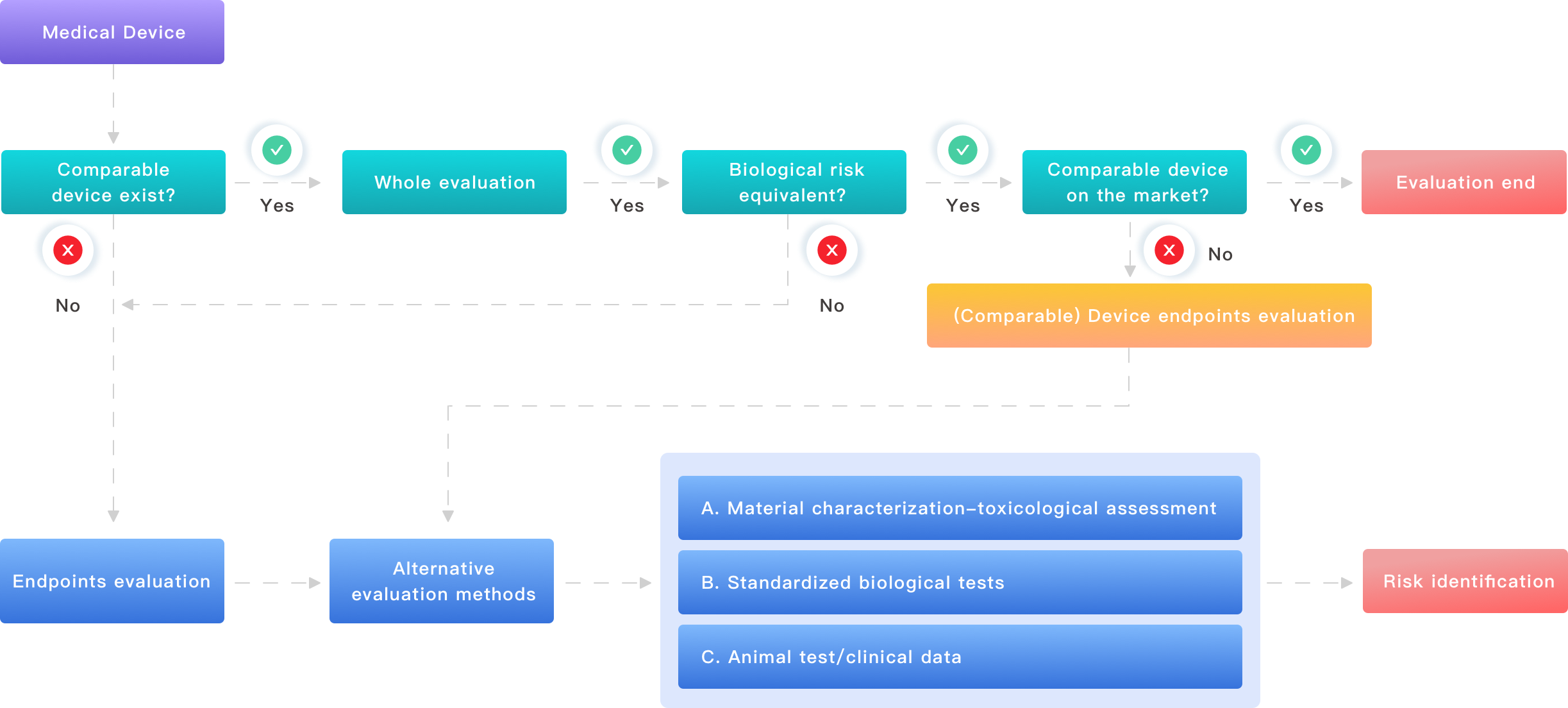
1) Relevance of extraction conditions — do they mimic the clinical fluid, temperature, and time? Quantify the gap. 2) Analytical coverage — combine GC-MS for volatiles, LC-MS/MS for polar compounds, and HRMS for unknowns; list detection limits and matrix effects. 3) Integrated risk outcome — link measured concentrations to a formal toxicological assessment and document exposure assumptions. These three give you defensible decisions and clearer regulatory narratives.
I speak from direct experience: in 2017, a change of adhesive supplier at our Minneapolis facility led to a 0.8% increase in endotoxin signal across lots — small, but traceable when these metrics were in place. We altered the adhesive, revalidated the process, and resumed shipments with documented risk reductions. The lessons are concrete and doable.
For teams that need a pragmatic partner — one who understands lab realities and regulatory needs — consider experienced testing services that combine chemistry and toxicology under one roof. My last recommendation: plan simulated-use early, budget for non-targeted analysis, and keep toxicology aligned with chemistry from day one. For more structured support and device-focused testing, see Wuxi AppTec Medical device testing.
