Introduction: Your Project Timeline vs. Real-World Supply Constraints
Here’s the hard truth: most delays on hospitality and retail lighting builds come not from design, but from supply friction and integration gaps. You call a decorative light supplier when a mock-up stalls, and the clock is already loud. In a typical rollout, 38–52% of schedule risk clusters around component lead time, driver compatibility, and on-site commissioning—tiny parts, big impact (and costly rework). Is your current vendor stack designed to absorb shocks, or does it pass them downstream to your GC and integrator?
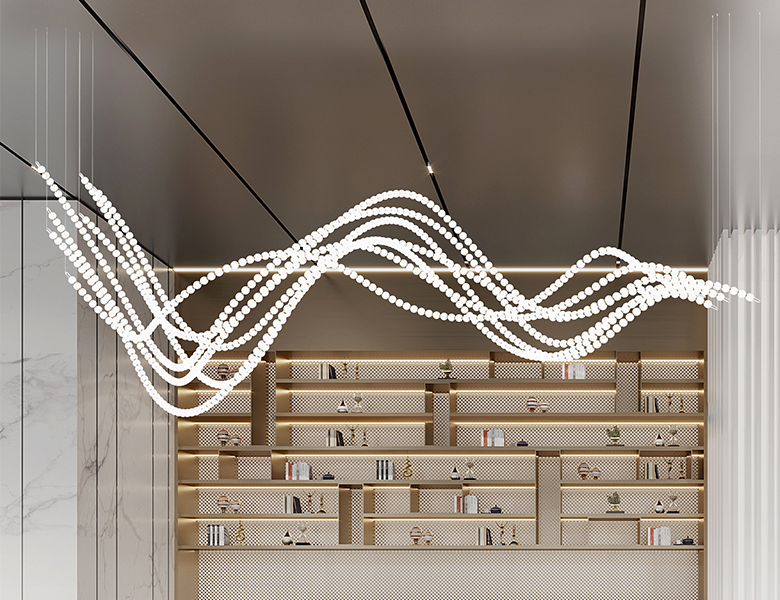
Picture a lobby with layered pendants, wall washers, and sign accent lines. Beautiful on render. But if the vendor cannot certify thermal management, standardize power converters, or pre-flight control protocols, your electrician becomes the test lab. That is where budgets leak. The ask is simple: compare suppliers on engineering outcomes, not catalog breadth. So, how do you set up that comparison without slowing the job?
Let’s map the decision space—then cut through the noise to what predicts a clean install and stable operation.
Part 2: The Hidden Fault Lines in Custom Sourcing
Where do legacy practices break?
When teams source from bespoke lighting companies, they often assume “custom” means “fully coordinated.” Technically, it rarely does. Traditional RFQs separate fixture body, drivers, and control gear into different vendor lines; that invites mismatch on power factor, dimming curves, and heat dissipation. The result: flicker under low-end trim, driver whine, and early lumen drop. Look, it’s simpler than you think—spec alignment upfront beats field fixes every time. Ask for integrated photometry plus driver pairing, including low-end dimming validation on 0–10V and DALI. If the shop can’t simulate thermal load on housings and heat sinks, they’re pushing risk to the site—funny how that works, right?
Legacy solutions also hide labor time. A custom chandelier with mixed circuits may use three driver SKUs, each with different DMX512 profiles. That slows commissioning and inflates spares. A better pattern is unified control maps, PoE-ready options, and labeled harnessing for fast QA. Don’t forget safety files and EMC reports; if those land late, your AHJ review stalls. Technical red flags to watch: no stated R9 values, vague surge protection, and “universal” drivers with poor power converters at low loads. The fix is process, not magic—factory pre-assembly, burn-in at temperature, and documented test points for field service reduce callbacks by orders of magnitude.
Part 3: Comparative Tech Paths and How to Judge Them
What’s Next
Moving forward, compare vendors by how they implement new technology principles, not just if they “support” them. For instance, a robust path uses constant-current architectures with driver-in- canopy designs that simplify thermal management and service access. Paired with edge commissioning via secure apps, you cut field hours while raising traceability. Some decorative light manufacturers now standardize on programmable drivers with embedded NTC sensing; that keeps LED junction temps in check and preserves color point over time. Another signal: factories that run fixture-level EMC pre-scans and provide harmonized LDT/IES files matched to the exact optic. Small things—but they prevent weeks of drift later.
Here’s a compact way to evaluate, drawn from the weak spots we surfaced—yet looking ahead. First, controls maturity: request dimming curve plots, low-end stability data, and commissioning flowcharts (screenshots help). Second, component integrity: seek documented driver-LED pairing, surge ratings, and serviceable modules with standardized connectors. Third, lifecycle clarity: ensure parts lists map to maintainable SKUs and include MTBF projections. If two vendors price close, choose the one with better diagnostics and labeling—your techs will thank you. And if a factory offers PoE or hybrid DC bus options, weigh the long-term maintenance savings against up-front gear. The goal is fewer unknowns, faster turn-on, and repeatable outcomes—funny how reliability feels like speed in the end. Advisory close-out: track 3 metrics on every bid—commissioning hours per fixture, low-end flicker index at 1% output, and documented thermal margin at max ambient. That’s how projects land clean, and stay that way with kinglong.
