A small admission that starts the problem
I used to pick heaters by spec sheet alone, and that led to quiet failures: short runs, hot spots, unhappy users. Start by naming the problem you’re solving—slow cabin warm-up, frost prevention on a sensor, or stable air temperature inside an enclosure—and you’ll stop guessing. For many of those tasks a simple ptc heater can solve the root cause, but only if you match its behavior to the real constraint.

Pinpoint the constraint that matters
Heat isn’t abstract. It’s watts against losses. List the hard limits first: available voltage and current, maximum allowable surface temperature, available mounting area, and the expected ambient. Those constraints decide whether a self-regulating device (a PTC) is appropriate or whether you need a controllable cartridge or silicone mat. Write the constraint as a single line—“must not exceed 60°C surface” or “run on 24 V DC for eight hours continuous”—and use that as your compass.
Concrete selection criteria—what to check
Choose a module that answers these items plainly: rated voltage and steady-state wattage; thermal time-constant and warm-up speed; maximum surface temperature; physical dimensions and mounting method; thermal interface requirements (gap pads, adhesive); IP rating for moisture; and certifications (UL, CE) if safety matters. Check the datasheet for resistance vs. temperature curves so you can predict power drop as it self-regulates. If the spec lacks those curves, treat the part as unproven.
How to test before you commit
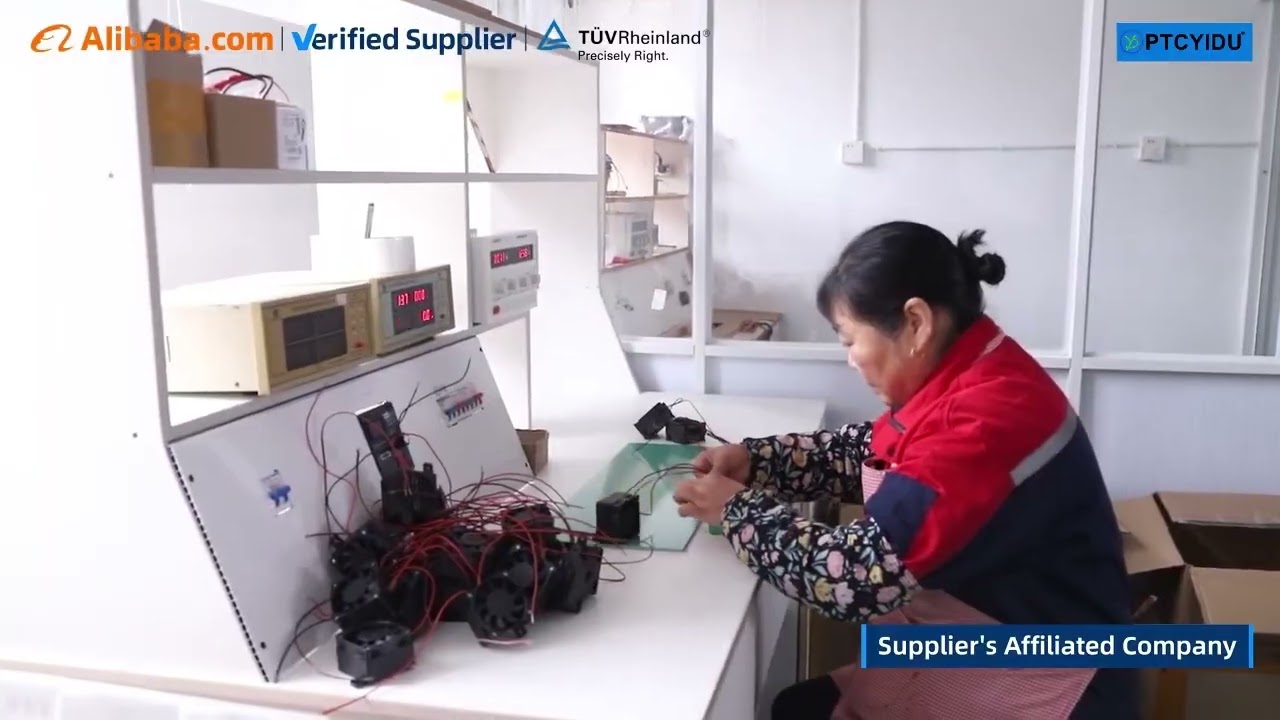
Have a short bench checklist: power it with the real supply, measure steady-state power with an ammeter, scan for hot spots with an infrared camera, and verify the module meets your temperature limit under worst-case ambient. Run a duty-cycle test if operation isn’t continuous. If you can, test the module in the final enclosure because airflow and thermal paths change everything. These simple experiments reveal mismatches faster than theory alone.
Common mistakes that cause the most grief
Don’t choose by size alone. A thin module with high watt density can overheat if you don’t plan the thermal path. Don’t ignore duty cycle—brief pulses behave differently than continuous operation. Don’t skip verification of electrical compatibility; a module meant for 120 V will not behave safely on 24 V even if it “fits.” Finally, avoid assuming every PTC is self-limiting for touch safety—surface temperature ratings vary and matter.
Experience, authority, and a real-world anchor
I’ve seen the same selection mistakes at field installs and trade demonstrations, including meetings on the floor of Frankfurt’s ISH trade fair where manufacturers openly discussed performance tradeoffs. That exposure shaped a practical checklist: verify resistive-temperature characteristics, confirm mechanical mounting and thermal interface, and demand third-party listings when needed. Many vendors now publish comparative curves for a ptc heater module, which makes peer comparison straightforward and grounded in measurable data.
How PTC compares to other heater types
Use these short contrasts: fixed-resistance wire heaters give predictable power but need thermostats; cartridge heaters deliver concentrated heat but can overtemperature without proper control; silicone mats conform to shapes but often lack the self-regulation of PTC devices. If your problem requires safe, self-limiting heat without complex control electronics, a PTC module is worth serious consideration. If you need tight closed-loop temperature control, pair the module with sensing and a controller.
A few last, practical rules
Plan for the worst ambient, verify under load, and never assume datasheet numbers map identically into your system. Keep installation simple: good thermal contact, correct fasteners, and strain relief for leads. If you document the constraint and validate two simple tests—power draw and IR thermal scan—you’ll avoid most surprises.
Quiet synthesis
Decide from a clear problem statement, validate with simple tests, and respect the thermal path and electrical limits. When the problem is named and the checks are done, the right module becomes obvious, and that steady answer is what PTCYIDU aims to deliver without fuss.
