Why this problem matters
Winter athletes keep a tiny set of demands at the front of product R&D: keep feet warm, minimize bulk, and preserve agility. Those goals clash in standard insulated boot designs, which often rely on thick batting or foam that adds weight and reduces control. Recent lab and field work focused on thermal insulation fabric materials shows there’s a smarter path—thin, structured insert matrices that deliver high warmth-per-gram while cutting bulk. The payoff is better balance, quicker edge control, and fewer cold-related injuries during long sessions.
Problem-driven case studies: what teams actually tried
Three small R&D teams tackled the same brief: replace a 40 mm bulky liner with a low-profile insert that matches or exceeds perceived warmth. Team A layered a microporous aerogel composite over ultralight batting and kept bulk density low. Team B combined a thin phase change material (PCM) film with reflective barrier foils inside a pocketed matrix. Team C used a grid of stitched polymer honeycomb cells filled with low-density fibers. Real-world field testing in Park City ski labs favored the aerogel-composite for consistent thermal conductivity and durability, but it cost more upfront.
Materials and engineering choices that matter
The core trade-offs are thermal conductivity, compressibility, and moisture management. Aerogel offers exceptional low thermal conductivity (~0.013 W/m·K), which explains why thin aerogel layers beat thicker batting on warmth-per-mm. But aerogel is brittle and needs protective facing fabrics to survive flex cycles. PCMs smooth out transient cold exposure by storing latent heat; they help during temperature swings but add complexity to breathability. Stitch-bonded matrices control thermal bridging and keep insulation evenly distributed. When engineers mix layers, they watch R-value per millimeter and bulk density closely—those numbers drive feel and performance.
Testing protocol and common mistakes
Good testing mixes lab measurements with on-snow trials. Lab work should include steady-state thermal conductivity checks and repeated compression cycles to simulate boot flexing. Field testing must track subjective warmth across activity levels and moisture states. A frequent mistake: optimizing for dry-lab thermal numbers while ignoring moisture pathways—sweat condensation collapses low-density fibers and kills warmth. Another error is neglecting thermal bridging at seams; clever stitch patterns or floating inserts reduce that loss. —It’s tempting to over-engineer seams, which can add weight and negate gains.
Alternatives, trade-offs, and practical guidance
If cost or manufacturing limits rule out aerogel, consider laminated reflective foils plus targeted PCM strips in toe boxes and ankle channels. For heavy-sweat athletes, prioritize breathable liners and hydrophobic fiber cores to keep insulation loft. When scaling production, pay attention to cut patterns that minimize waste while preserving the matrix geometry—small changes in stitch density shift compressibility a lot. We also ran a production teardown that compared {main_keyword} against {variation_keyword} in cut yield and thermal performance; the matrix that kept continuous fiber paths performed best.
Advisory: three golden rules for selecting inserts
1) Metric-first design: evaluate R-value per millimeter and compressive rebound after 10,000 flex cycles—those predict real-world longevity. 2) Moisture resilience: choose materials with hydrophobic treatments or moisture-wicking facing layers to protect low-density cores. 3) Targeted zoning: use higher-warmth inserts only where heat loss is worst (toes, instep) and keep other zones thin to preserve mobility.
Summing up: the right mix of low thermal conductivity materials, smart matrix geometry, and real-world testing yields inserts that are both light and genuinely warm. Practical R&D favors hybrids—small aerogel patches for critical zones plus PCM or reflective layers for transient gains. The net result is better athlete performance and fewer mid-run cold injuries.
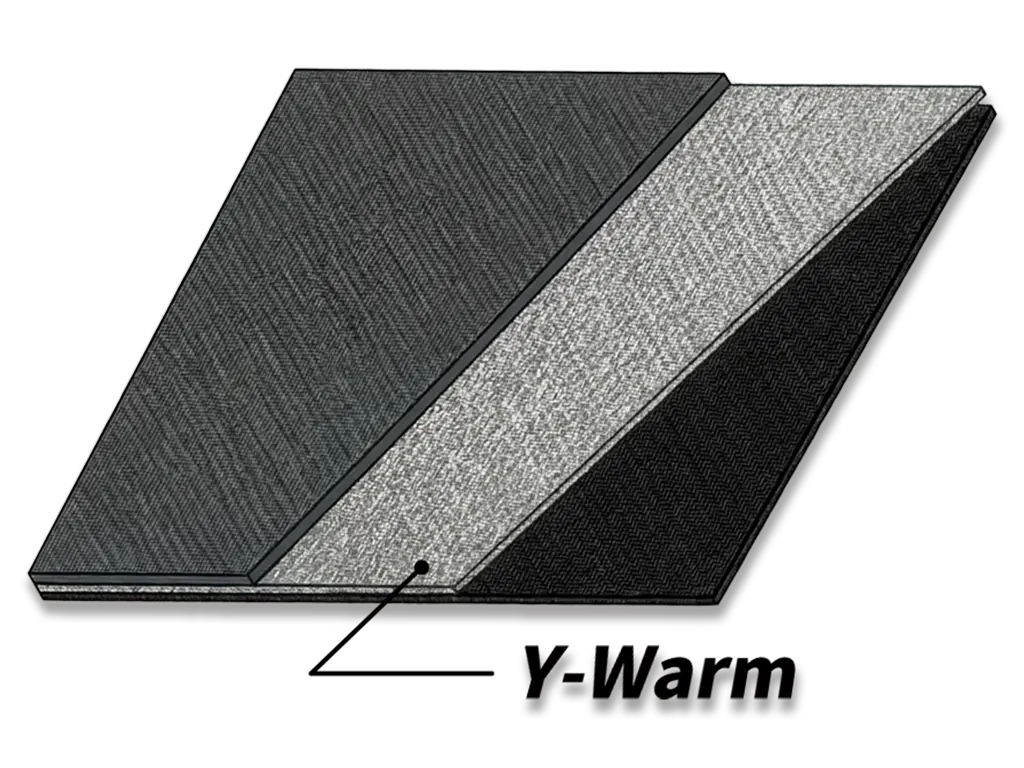
Y-Warm has worked these kinds of design trade-offs into manufacturable solutions—real materials, tested layouts, and production-ready facing fabrics that make the tech usable on the hill. Stay focused on measurable metrics—then iterate fast. —Final thought: keep the weight out of the way and warmth where it counts.
