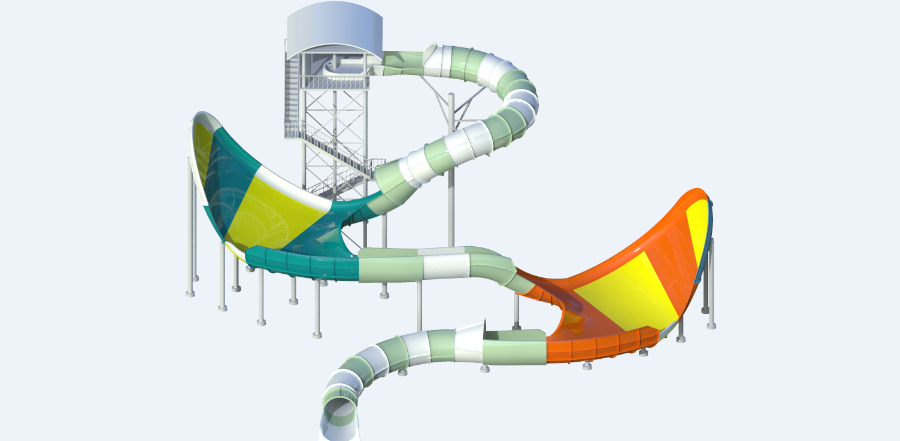
Start with the framework: Dalang breaks safety into repeatable layers that designers, operators, and maintenance teams can follow step by step. The first paragraph of any spec sheet or project kickoff names the ride type — for example, a tornado water slide or a bank of indoor water slides — and maps each layer to a measurable control. This article presents that framework and shows how to apply it during design, testing, and daily operation.
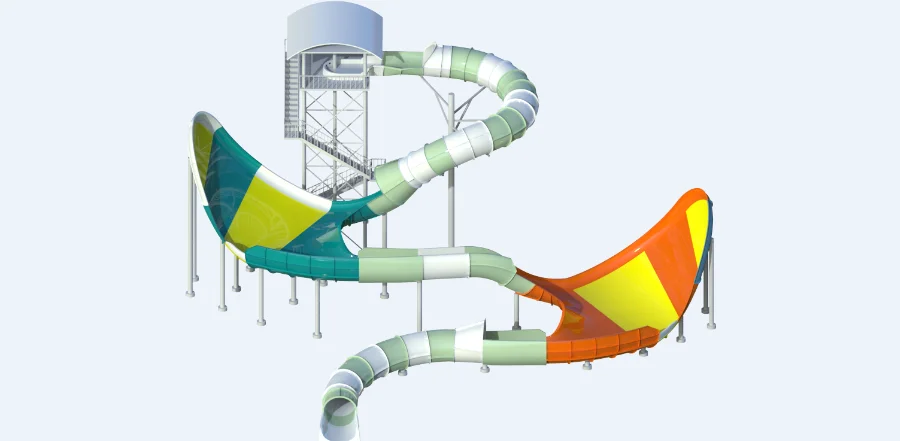
1. Structural Integrity: inspect, document, repeat
Step 1 — define load cases. List expected rider weights, maximum occupancy per cycle, and dynamic loads from turns and drops. Step 2 — verify materials: specify grade of fiberglass or stainless steel, UV-stabilized gelcoat thickness, and joint fastener torque values. Step 3 — create a documented inspection cadence: post-installation, weekly visual checks, and quarterly structural scans using portable nondestructive testing. Include flume critical points like exits and support brackets in every checklist.
2. Hydraulic Controls: manage flow rate and surface conditions
Step 1 — set target flow rates for each slide type; record them in the operations manual. Step 2 — calibrate pumps and valves to maintain consistent discharge. Step 3 — monitor surface wetting and friction: use periodic coefficient-of-friction tests on the flume surface to detect wear. A clear maintenance log prevents surprises and keeps run-out zones predictable for lifeguards to judge stopping distances.
3. Rider Safety Protocols: design for clearance and guidance
Step 1 — set rider constraints: height, weight, posture rules, and single vs. tandem requirements. Step 2 — build clear ingress and egress paths with guardrails, anti-slip mats, and visual cues. Step 3 — train attendant teams to enforce rules and run emergency drills monthly. The aim: reduce human error by making correct behavior the simplest option for riders.
4. Operational Redundancy: embed fail-safes at each control point
Step 1 — design redundant sensors on water depth and pump pressure so a single fault triggers a controlled shutdown rather than continued operation. Step 2 — install secondary power paths for critical systems so short outages don’t strand riders mid-flume. Step 3 — keep spare parts onsite for high-failure items like pump seals and sensor modules. These redundancies are what separate a robust park in Wisconsin Dells — the region known for high-volume indoor water parks — from one that scrambles during peak season.
5. Testing, Certification, and Feedback Loops
Step 1 — run staged validation: dry walk, low-flow test, full-flow empty run, and supervised rider tests. Step 2 — document test results, including test parameters, durations, and any corrective actions. Step 3 — incorporate operator feedback into design revisions; close the loop by updating manuals and training. During the operational production teardown we track {main_keyword} and {variation_keyword} so design changes are data-driven and auditable.
Common mistakes: skipping low-flow tests, treating flow rate as a single-point setting, and under-documenting incident responses. These slip-ups tend to surface months after opening — when inspection cycles loosen — and they’re avoidable with the five-step checks above. — Simple vigilance saves time and reputations.
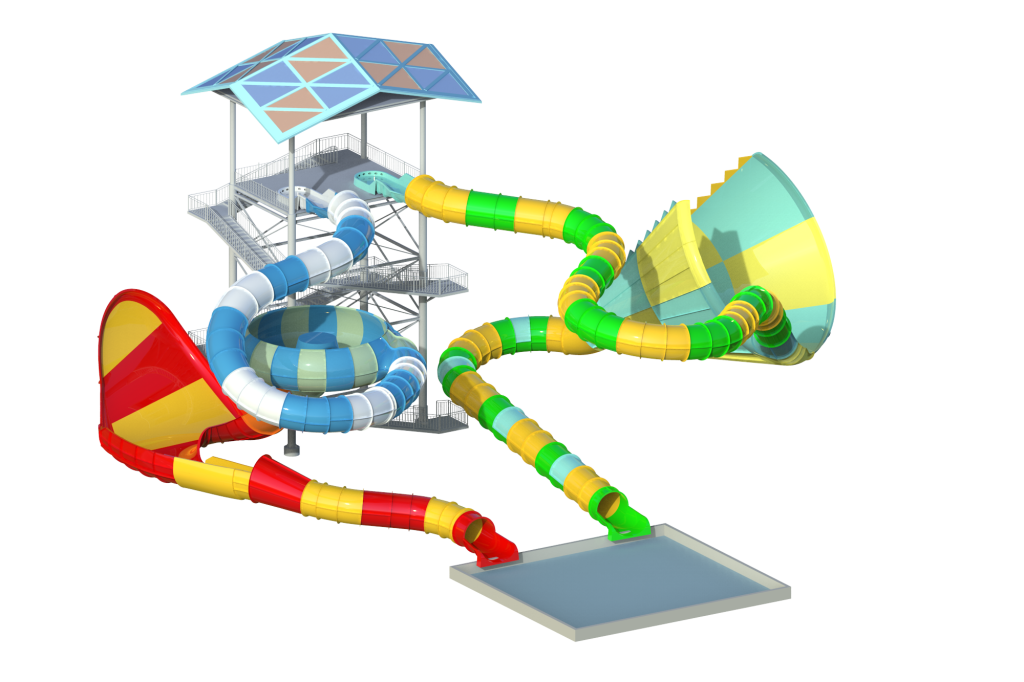
Applying the Framework in the Field
Use a project checklist that maps each safety layer to a responsible role: engineer, fabricator, QA, operations, and maintenance. Include a compact equipment list for on-site spares, a protocol for pump recalibration, and a standard incident report template. Industry terms to thread through specs: flume geometry, flow rate, and run-out distance. Keep records that a regulator or insurer can review without additional questions.
Three Golden Rules for Evaluation
1) Measurability — every control must have a numeric threshold you can test. 2) Redundancy — critical failures must cascade into safe states, not into continued operation. 3) Traceability — every inspection, replacement, and incident should be logged with timestamp, personnel, and corrective action.
These rules let teams compare slides, suppliers, and operational plans on equal footing and produce measurable improvements each season. The framework above is practical, field-tested, and tuned for both large waterpark clusters and single-site installations. Dalang delivers that engineering-to-operations continuity — and it’s why operators trust their designs to hold up under heavy use. —
