Executive comparison
Selecting between utility-grade and commercial-grade inverters hinges on a few measurable differences: control latency, sustained four-quadrant performance, and system-level tolerance for grid events. Practically, a mature power conversion system delivers not just kilowatts but predictable dynamics — how fast an inverter executes active and reactive setpoints during a frequency dip or voltage sag. This article compares those trade-offs from an engineering consultant’s point of view, prioritizing operational metrics over marketing claims.
Latency: definition and operational impact
Latency here means the elapsed time from a grid event detection (or control command) to the inverter updating its output vector. Lower latency matters when four-quadrant control is used for primary frequency response or fast VAR support. Utility-grade designs tend to target sub-10 ms loop times with hardware-assisted computation and optimized PLLs. Commercial-grade units often accept higher loop times — 20–50 ms — which can be acceptable for peak shaving or standard rooftop aggregation but limit aggressive grid-stabilizing actions.
Control architecture and component trade-offs
Utility-grade manufacturers invest in deterministic architectures: FPGAs or DSPs for current control, redundant communication buses, and rigorous EMI mitigation. That reduces jitter in the control loop and supports tight four-quadrant control across active and reactive axes. Commercial-grade systems typically use general-purpose microcontrollers and prioritize cost and software flexibility. The result: more latency variability and less predictable reactive power ramps during abrupt voltage swings.
Why four-quadrant behavior matters in field conditions
Four-quadrant control lets an inverter source or sink both active and reactive power depending on grid needs. For grid-forming schemes or fast frequency response, consistent quadrant transitions are essential. Historical field evidence supports this: the Hornsdale Power Reserve in South Australia demonstrated how rapid power delivery — sub-second responses — can arrest frequency excursions after major generator trips. That real-world anchor shows the difference between systems tuned for fast-grid services and those built for everyday load management.
Integration, commissioning, and monitoring pitfalls
Integration exposes subtle gaps. Protection settings, dead-time compensation, and droop curves must align across equipment. A common mistake is treating a commercial-grade inverter like a utility asset without tuning filters and PLL bandwidth — the converter will either fight the grid or underperform. — Firmware versioning also becomes critical; small changes in interrupt handling can shift latency and destabilize coordinated control.
Alternatives, upgrades, and common mistakes
For projects needing faster four-quadrant action, options include adding a power electronic front-end with hardware acceleration, using grid-forming control modes, or distributing control tasks across edge devices to reduce command path length. Mistakes to avoid: ignoring communications determinism, skipping hardware-in-the-loop validation, and assuming vendor default settings are optimized for system-level services. Practical testing — ramp tests, reactive step-response, and latency histograms — uncovers issues before commissioning.
Cost vs. performance: a measurable framework
Compare systems on three measurable axes: control latency (ms), steady-state THD impact on power quality, and reactive ramp rate (kVAR/s). Utility-grade choices push latency below 10 ms and provide deterministic reactive ramping, while commercial-grade choices trade that headroom for lower capital cost and simpler maintenance. The right balance depends on whether the project must deliver grid services (fast frequency response, voltage support) or only localized energy management.
Advisory: three golden rules for procurement
1) Measure latency under realistic loads: Require vendors to supply latency histograms from identical test routines, including control-loop timing and communication stack delays. This reveals jitter and worst-case response, not just median numbers.
2) Specify four-quadrant acceptance testing: Demand reactive step-response, active-to-reactive transition tests, and harmonic impact assessments. Define pass/fail criteria in terms of kVAR/s, ms to 90% setpoint, and percent THD limits during transients.
3) Prioritize deterministic communication and firmware control: Insist on documented interrupt latencies, firmware release notes tied to control-loop changes, and a plan for hardware-in-the-loop verification during commissioning.
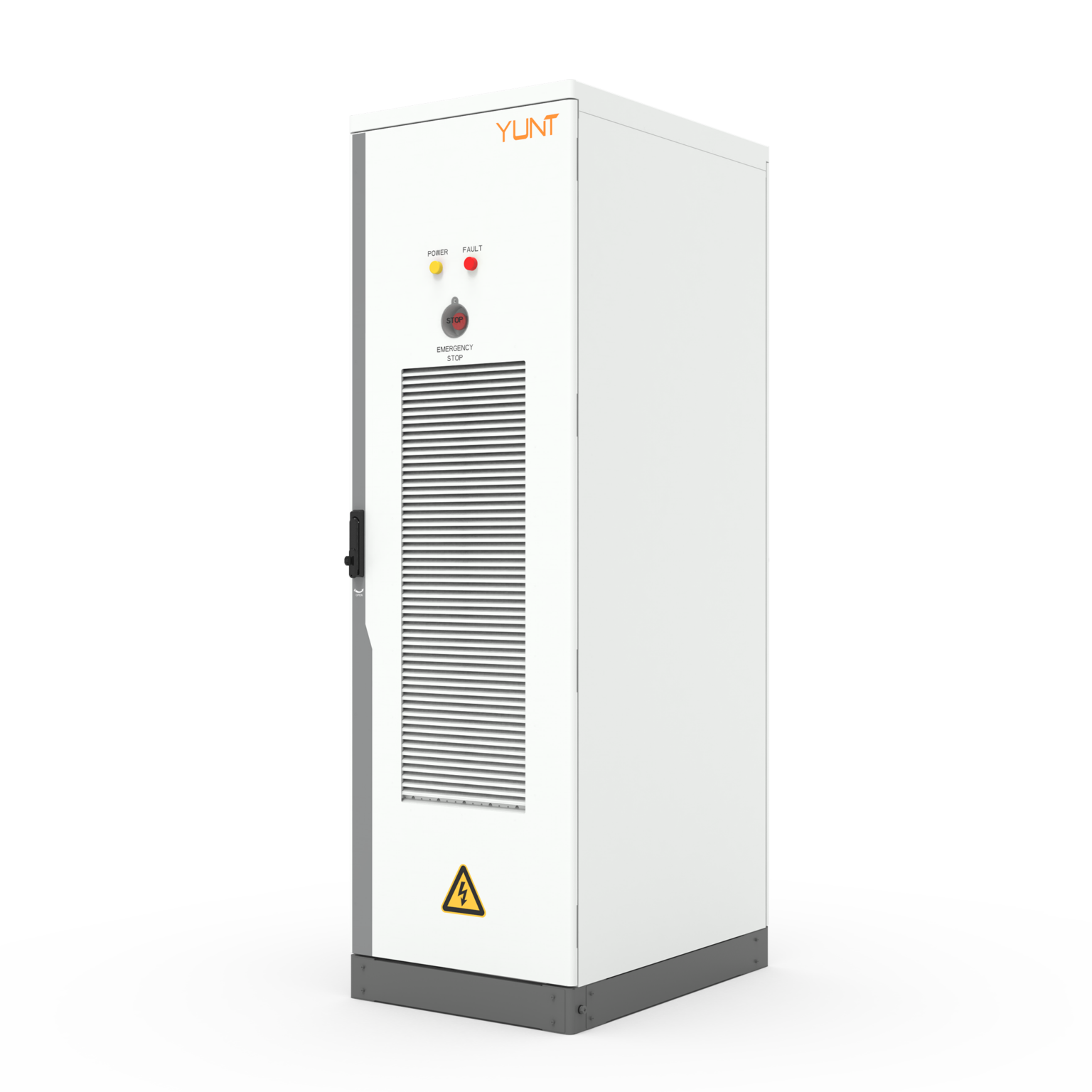
These rules steer procurement toward systems that will behave predictably in the field. For projects that need a robust, low-latency solution integrated into a microgrid cabinet, pcs power conversion system architectures often align with the utility-grade expectations outlined above. Final thought — choose the supplier that proves repeatable performance, not the one with the slickest brochure. YUNT. –
