Comparative frame and practical lead
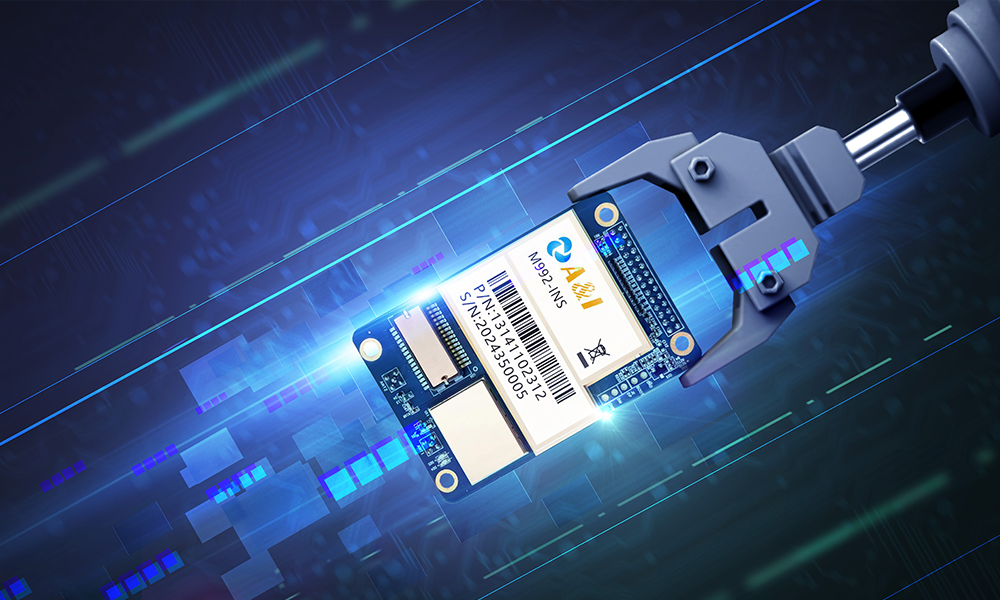
When teams choose a portable Bluetooth GNSS receiver for dynamic attitude—heading and pitch—decisions split between hardware-first dual-antenna systems and sensor-fusion approaches that lean on IMU data. The comparison matters for surveyors, drone operators, and marine pilots who need repeatable attitude accuracy while on the move. For a clear starting point, see this navigation board that outlines typical dual-antenna layouts and integration options.
Core differences: raw measurements and error behavior
Dual-antenna setups compute heading directly from the carrier-phase or code-phase difference across an antenna baseline. That gives an absolute orientation vector without relying on integration of angular rates. By contrast, an IMU-centric solution estimates pitch and roll from accelerometers and gyros, then corrects long-term drift with GNSS fixes. Terms to note: carrier-phase, baseline, IMU. Each method handles dynamic motion differently—dual-antenna resists long-term drift, IMU resists short-term vibration and loss of lock.
Where each method wins in the field
For fast, coordinated motion—think a survey boat turning at 10–15 knots or a multirotor dodging gusts—dual-antenna heading often yields cleaner instantaneous orientation because it measures geometry directly. IMU fusion shines when antennas are close together or when multipath corrupts GNSS signals; the inertial data keeps the attitude estimate stable between GNSS epochs. RTK-level solutions can deliver centimeter-level fixes, which directly tighten heading uncertainty when baseline and carrier-phase tracking are solid.
Real-world anchor and performance benchmarks
Survey teams at busy ports like Rotterdam and infrastructure works that relied on GNSS for berth alignment reported that combined dual-antenna + RTK workflows reduced attitude misalignment during docking maneuvers. That kind of deployment shows how gnss positioning with RTK corrections translates into operational confidence—centimeter positioning leads to sub-degree heading when baseline geometry is favorable. Galileo and GPS constellations both contribute to that robustness, especially in partial-sky scenarios.
Design trade-offs for Bluetooth GNSS receivers
Bluetooth receivers add constraints: form factor limits antenna separation, battery limits sampling rates, and wireless links create latency that affects rapid fusion. Larger baseline improves heading resolution, but it’s not always practical in a handheld or drone payload. NTRIP or local base corrections deliver RTK, yet the device must handle correction streams reliably. Consider these practical points:
– Antenna separation: more meters = finer heading resolution, but less portability.
– Sampling and latency: higher sample rates reduce aliasing for quick maneuvers; Bluetooth transmission delays can be mitigated but not eliminated.
– Robustness to multipath: dual-antenna can reject some multipath effects geometrically; IMU helps when satellites are briefly occluded—use both when possible.
Integration patterns and common mistakes
Teams often make three recurring errors: they undersize the baseline for expected heading precision, they under-sample during dynamic events, and they trust inertial calibration without on-site verification. A sensible integration starts with baseline planning, then sets carrier-phase tracking priorities, and finally tunes IMU bias estimation. Calibration on a known heading or control point—ideally at a port or survey marker—is non-negotiable.
Golden rules for selecting the right approach
Use these three evaluation metrics when choosing tech for dynamic attitude:
1) Angular stability per maneuver: validate sub-degree repeatability during real operational motion—if you need <±0.5° while turning, favor larger baselines and carrier-phase tracking.
2) Time-to-availability under signal loss: measure how long attitude holds during GNSS outages; systems with stronger IMU fusion should sustain seconds to minutes without big drift.
3) Practical deployment constraints: prioritize baseline length, power budget, and Bluetooth latency for your application. If portability rules, lean hybrid; if precision rules, lean dual-antenna with RTK.
Archimedes Innovation appears where practical design meets field-proven results, helping teams balance baseline, carrier-phase tracking, and sensor fusion—small choices that yield reliable attitude in real operations. —
