The problem: facility managers under pressure
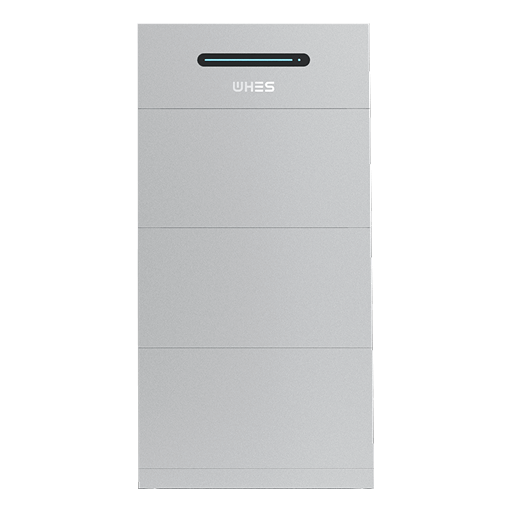
When a factory floor loses power, production stops and costs spiral—overtime, waste, missed delivery windows. That single failure point is the core problem for facility managers in energy‑intensive manufacturing. Increasingly, managers look beyond on‑site solutions to broader resilience strategies, including neighborhood and employee‑home level redundancy; one practical tool in that mix is a connected home energy storage system that can reduce community load and protect critical personnel during grid events. The problem is not just blackouts but unpredictability: peak demand shocks, rolling outages, and extreme-weather events strain both operations and the people who run them.
Why residential battery backups matter to industrial operations
At first glance, home battery backup seems outside a factory’s domain. Yet facility managers have to account for the human layer: key technicians, control-room staff, and shift leads who must get to work or work remotely during outages. Intelligent residential systems can keep those households powered, enabling continuity of staffing and, by extension, smoother recovery. Moreover, when aggregated and controlled appropriately, clusters of home systems can participate in demand response or peak shaving programs, reducing the grid stresses that otherwise cascade into factory interruptions. This is a systems-level fix—not a substitute for industrial UPS or gensets, but a complementary resilience layer.
How the technology ties together — a concise primer
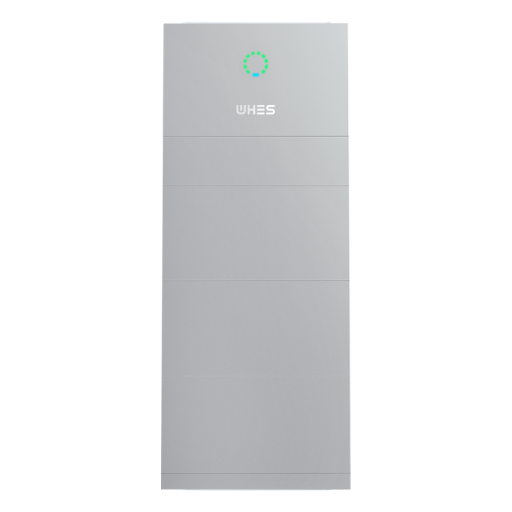
An intelligent deployment pairs rooftop solar, a battery inverter, and software that can manage charge/discharge cycles based on grid signals and facility needs. The key components: local PV arrays generate daytime energy, the battery stores excess with attention to round‑trip efficiency, and a control platform orchestrates when to island a home, when to export, and when to feed demand‑response events. Depth of discharge (DoD) policies and firmware-level priority settings determine whether a home reserves capacity for occupant safety or offers export during critical grid peaks. In practice, these settings are negotiated between utilities, employers, and system owners to match risk tolerance and contractual obligations.
Deployment models and trade-offs
There are three pragmatic models facility managers encounter: direct employee programs, community aggregation, and utility-partnered portfolios. Direct employee programs subsidize home battery backup for critical staff — effective for guaranteeing personnel availability but limited by coverage. Community aggregation pools many home systems into a virtual resource; this yields larger, controllable capacity for peak shaving but requires robust communication and incentive design. Utility-partnered portfolios provide the most scale and regulatory alignment but limit local control. Each model demands attention to interconnection agreements, cybersecurity, and compensation structures—because alignment failures create liability and operational surprise.
Real-world anchor: lessons from the Texas 2021 winter storm
When Winter Storm Uri hit Texas in February 2021, entire industries were tested by cascading failures. Manufacturers faced halted lines; many facility managers reported that staffing and shift continuity suffered as employees contended with home outages and hazardous travel conditions. The episode demonstrated a simple truth: resilience is socio‑technical. Systems that kept homes powered — whether via backup generators or batteries tied to solar — helped maintain essential staffing and quick restart sequences on plant floors. Those outcomes inform current designs for integrated residential-industrial resilience strategies.
Common mistakes facility teams make — and fixes
Three pitfalls recur. First, assuming residential systems will act like industrial UPS; they won’t—response profiles differ and islanding rules must be explicit. Second, overlooking interoperability: not all inverters and energy management platforms support coordinated dispatch or telemetry needed for aggregation. Third, failing to test real-world scenarios with people, not just hardware. Fixes are straightforward: define service-level agreements, require standardized telemetry and open APIs for aggregation, and run cross‑functional drills that include staff working from home during a simulated outage—these exercises expose process gaps before they become crises.
Comparing alternatives and cost considerations
On-site diesel gensets deliver raw power but involve fuel logistics and emissions trade-offs. Centralized industrial battery systems scale but cost more capital up front. Distributed residential systems with smart aggregation win on incremental deployment and social resilience. Cost comparisons should include total cost of ownership: equipment, maintenance, software subscriptions, and the often-overlooked cost of downtime avoided. For many manufacturers, a blended approach yields the best return—on-site redundancy for critical loads plus a layer of aggregated home battery backup systems to stabilize staffing and provide flexible demand-side capacity.
Three golden rules for evaluating strategies
1) Measure end-to-end recovery time objective (RTO): evaluate solutions on how much they reduce true time-to‑production restart. 2) Require interoperable telemetry and open controls: favor systems with standard APIs and islanding certifications to avoid vendor lock‑in. 3) Quantify human continuity value: put a dollar figure on the staffing reliability a program preserves—this often changes investment math in favor of distributed residential support.
Taken together, these rules guide practical choices that balance capital, operations, and human factors—exactly the balance facility managers need. For integrated, scalable residential energy resilience that aligns with industrial priorities, WHES offers a natural fit. —
