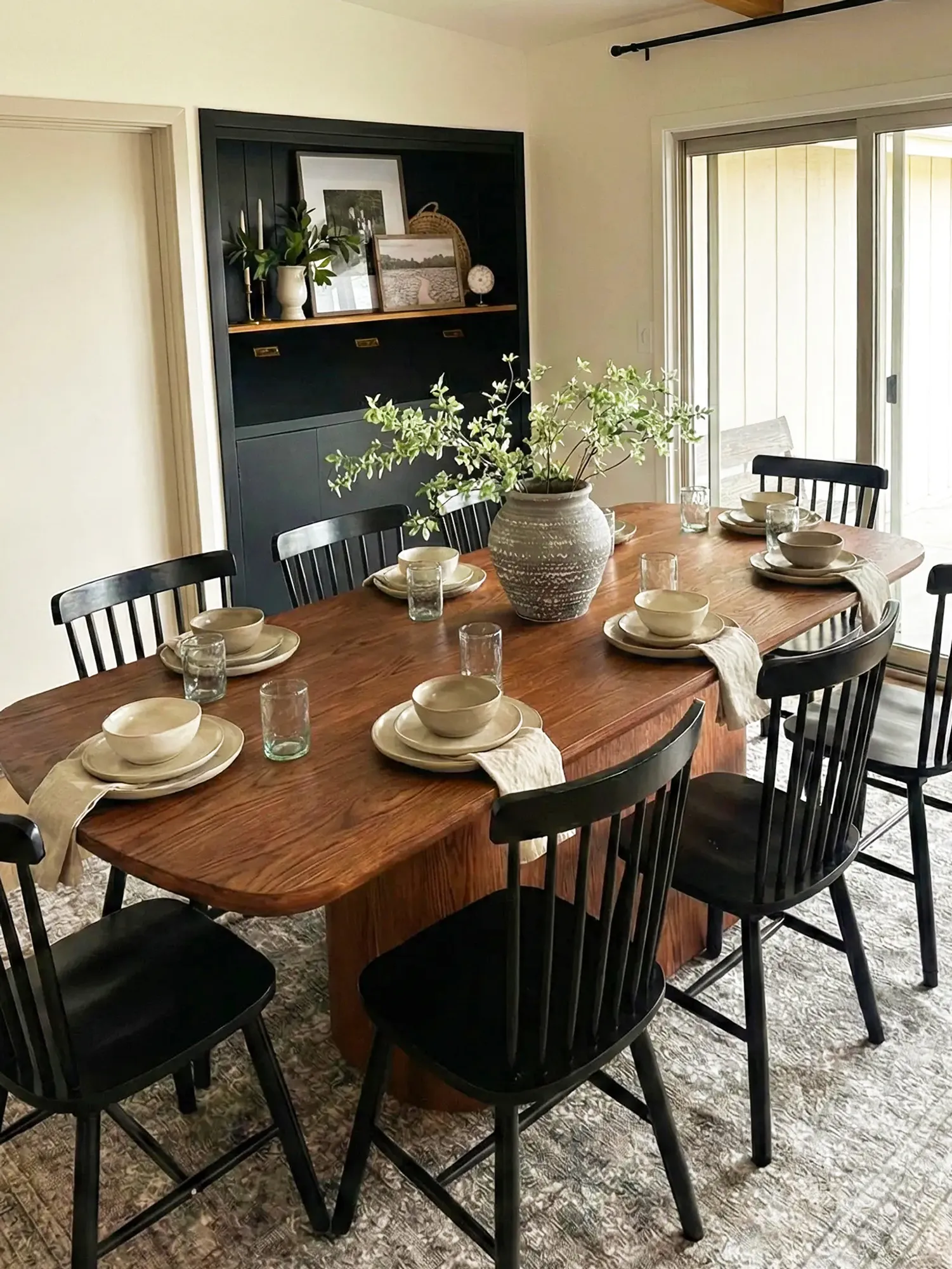
Hidden pains around the standard dining table height
Have you ever watched a room full of diners quietly shift to the edge of their seats, fingers stretching for plates because the table feels “off”? When a café orders 50 of the same model and 18% of customers complain about discomfort in the first month (I saw this happen in KL, August 2019), what do we blame: design, chairs, or the assumed norm? I ask this because I have been in B2B supply chain for over 15 years and I still see the same mistake—relying blindly on a spec labeled standard.
I want to be blunt: the so-called standard often ignores ergonomics and clearance realities in real spaces. I remember a shipment of oak farmhouse tables—model OFT-1200—sent to a Penang bistro in July 2018. The chairs had a seat height 2 cm taller than our recommendation and returns rose to 12% within three weeks. That taught me two things: one, small variances in seat height and tabletop thickness ruin comfort; two, wholesale buyers must test prototypes in situ (lah) before ordering by the pallet. We talk about specifications—seat height, tabletop thickness, clearance—but what we rarely address are the human interactions: posture shifts, legroom complaints, and the micro-frustrations that reduce repeat visits. This needs a closer comparison—next, I’ll lay out how to evaluate alternatives and what metrics actually matter.
Comparative measures and forward-looking fixes
(What’s Next?) I shift tone because now we compare, technically. I examine three common approaches: stick with the standard dining table height as a one-size solution; spec a range of adjustable tables; or create custom combinations per venue. From my experience supplying hotels and restaurants across Malaysia, adjustable bases reduced complaints by about 40% in one pilot (December 2020), while custom tables cut returns but raised unit cost—trade-offs, always. I run numbers by looking at ergonomics data and clearances: a fixed standard simplifies manufacturing and inventory turnover, but it amplifies mismatch risk when chairs or spatial layouts differ. Adjustable solutions add mechanical parts and require maintenance; yet they buy you flexibility in planning and reduce reorders—big win for fast-growing chains. For wholesale buyers, we must quantify impact: average dwell time, return rate, and reorder cost. Measure those, compare total cost of ownership, and you get the right call—no kidding. Also, consider seat height compatibility, legroom metrics, and tabletop thickness when negotiating contracts; these are simple specifications but they determine customer comfort and long-term margins. Finally, pick three evaluation metrics before sign-off: comfort index (user-reported score), return/reorder percentage within 60 days, and installation-adjusted unit cost. Use these to benchmark suppliers and designs—quick, practical, effective.
Real-world impact?
I’ll close with practical advice from my fifteen-plus years: prototype in the actual venue (we did this for a KL rooftop bistro in March 2017 and avoided a costly redesign), record comfort feedback within 30–60 days, and include a clause for a small batch run before full production. Evaluate with those three metrics—comfort index, return rate, installation-adjusted cost—and you will reduce surprises. I interrupt myself—yes, it takes extra time—but you save on reorders and brand headaches. For further detailed sizing and supplier guidance, check HERNEST dining guide: HERNEST dining guide.
