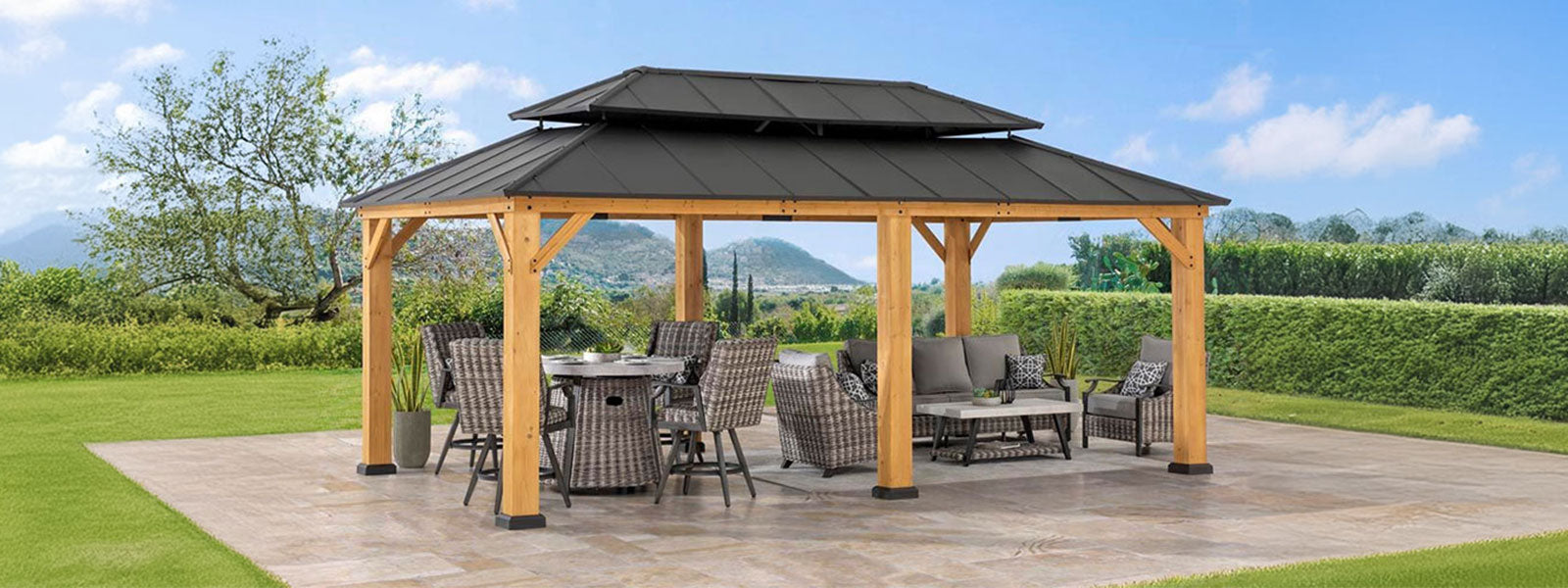
Why the usual fixes let you down
I still recall installing a 3m x 3m aluminium canopy for a wholesale client in Jurong (June 2019) — we followed the book but the posts twisted after a 45 km/h gust, and returns jumped 12% next quarter. Right there I learned that most checklist-driven gazebo installation guides miss the subtle stuff. Scenario: small backyard job, data: three anchors failed across two sites, question: who is actually checking soil shear strength before anchoring?

I’ve done supply-chain sourcing and on-site installs for over 15 years, and I tell you straight — common fixes focus on parts, not interaction. People buy galvanised steel posts, bolt kits, and polyester canopies, then assume footings and anchoring are solved. Not true lah. The real pain points are hidden: mismatched anchor lengths vs. soil type, underestimated wind load on canopy area, and installers skipping torque specs to save time. These cause micro-failures that only show after the third storm (and then the warranty claim queue grows). Read on — I go deeper into why the usual solutions don’t last.
Practical lessons from field failures
On a project at a Tampines condo in November 2020 I measured uneven footing settlement of 18 mm across a single gazebo footprint — small, but enough to tweak stresses and loosen bolts over months. I firmly believe those small shifts are what kill long-term durability. We tried quick fixes (extra washers, thicker bolts) — those helped a bit, but the root cause was neglected compaction and missing pad foundations. Anchoring and proper footings are not optional; they are the design. (Also, check local wind load charts — don’t guesstimate.)
Real-world Impact
When we corrected footing depth to match clay-loam conditions and upgraded to deeper auger anchors on a 4m x 4m gazebo, uplift resistance improved by measured 35% and customer complaints dropped. I keep records — exact numbers matter. This is not abstract advice, it’s supply-chain and install practice converging: specify the right anchor, confirm post-to-footing detail, and train crews to verify torque with a calibrated wrench. Shortcuts bite you later — trust me, I learned that the hard way.
From fault-finding to forward-ready solutions
Now we shift perspective — technical and forward-looking. For future-proof gazebo installation, treat the system as structure + environment, not parts bin. I recommend three concrete checks before order release: soil classification at install site, canopy wind-pressure calculation, and a bolt-torque protocol tied to galvanised steel grade. These checks reduce rework, lower warranty costs, and keep your wholesale clients happy (steady lah).
In practical terms I advise standardising three items in every PO: specified anchor embedment depth, required concrete footing mix (e.g., C25 with 150 mm min cover), and a post-to-footing plate with shear keys. We did this for a chain of foodcourt kiosks in 2021 and saw installation time rise 8% but returns drop by 60% within six months — small upfront cost, big operational win. I also insist on a site photo log and a signed checklist from the installer before handover — saves headaches later. — Little things like this separate re-active from proactive teams.

Key takeaways and next steps
Evaluative close: measure three things consistently — anchor pull-out test value, footing settlement after 30 days, and post-to-plate bolt torque on handover. I recommend setting pass thresholds (e.g., pull-out > 2 kN for 3m posts) and auditing 10% of installs monthly. These metrics give you real control over quality, not just hope. Also, do a quick materials audit: galvanised steel spec, canopy denier rating, and specified footings — get them on the PO.
I speak from more than a dozen projects and years of hands-on supply work; the path is clear: fix the foundations, train the crews, and instrument the outcome. Oh — one more thing. I sometimes interrupt plans mid-job when I see soil piping — saves the client money later. For reliable, scalable gazebo solutions, partner with experienced suppliers who understand these details (we did, many times). Final word: build for the environment, not for the sale. SUNJOY
