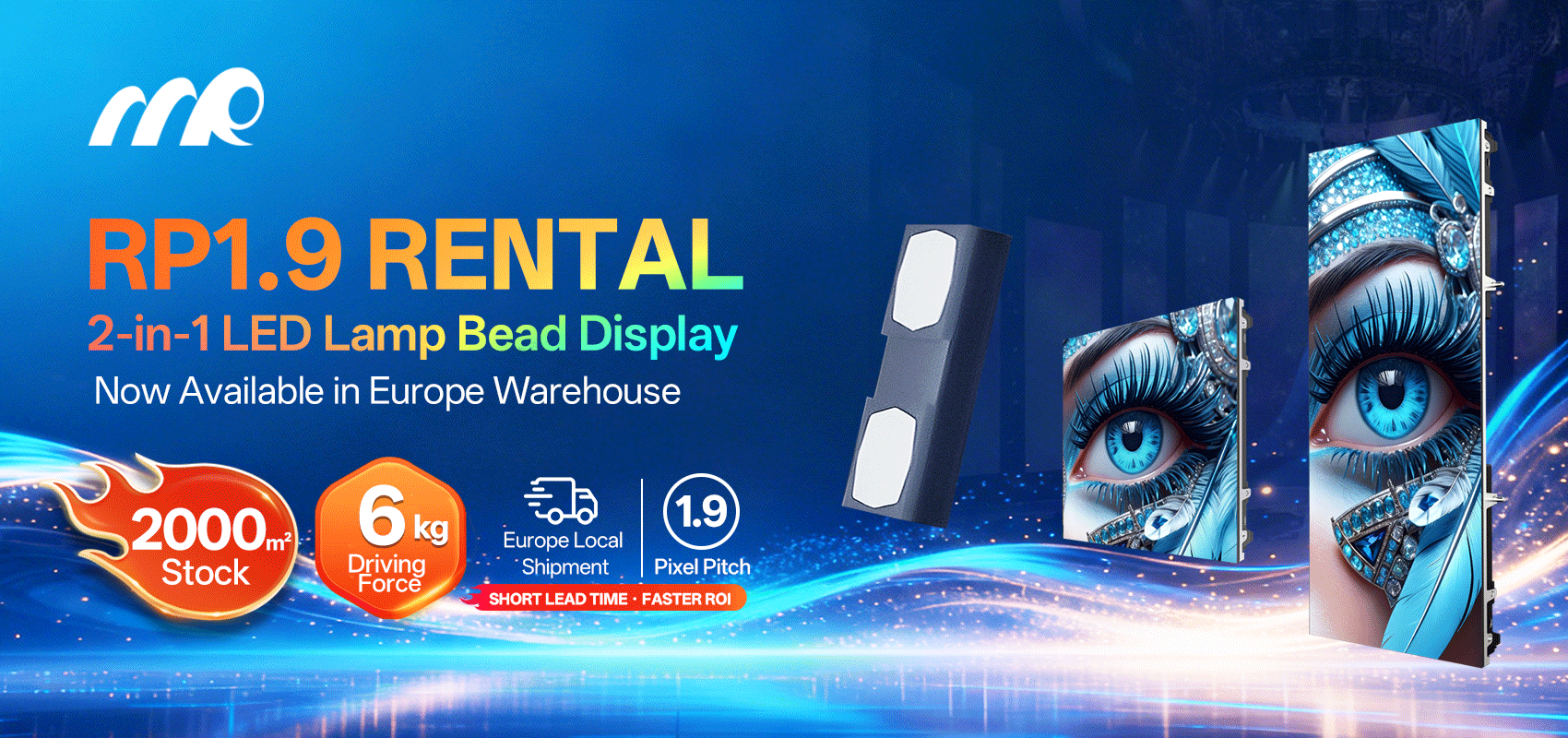
Comparative framework for aspect ratios and scaling
Selecting a commercial-grade backdrop begins with a comparative assessment of aspect ratio strategies and processor scaling pathways. Contemporary event planners and technical directors evaluate native display aspect ratios (commonly 16:9 and custom wide formats) against source material to determine whether hardware or software scaling will preserve image fidelity. A practical reference point is the specification sheets of a typical led display screen, which enumerate native resolution, supported input formats, and onboard processing capabilities; these data points frame the decision between upscaling, downscaling, and letterboxing. The chosen approach affects perceived sharpness, latency, and uniformity across a multi-module video wall.
Hardware considerations: pixel pitch, processors, and signal flow
Comparing hardware options requires attention to pixel pitch, refresh rate, and the video processor’s feature set. Fine-pitch modules produce higher perceived resolution at shorter viewing distances; however, they impose stricter requirements on source resolution and scaling accuracy. Video processors differ in their scaling algorithms, color calibration tools, and their ability to map irregular aspect ratios without introducing interpolation artifacts. The optimal procurement choice aligns pixel pitch to viewing distance, ensures the processor supports multi-format inputs, and provides robust mapping for seamless bezel compensation.
Performance trade-offs: latency, resolution, and color management
When juxtaposing processor-led scaling and source-side scaling, three performance dimensions emerge: latency, spatial resolution, and color fidelity. Processor scaling centralizes control and simplifies content workflows but can add measurable frame delay if de-interlacing or complex color grading is applied. Source-side scaling preserves timing but increases the burden on content production. Color calibration remains essential in either model; uniform LUT application across a large canvas reduces visible seams. Practically, teams prefer processors that offer per-zone color profiles and real-time preview to minimize iterative site visits.
Installation realities and a field anchor
Field experience demonstrates that theoretical parity rarely matches on-site conditions. Observations from large urban installations—most notably the LED canvases in Times Square—illustrate that environmental variables, structural tolerances, and ambient luminance force adjustments to both aspect ratio decisions and scaling presets. Integrators commonly reserve a portion of budget for additional processing capacity and flexible input routing to accommodate last-minute creative changes. These measures reduce the risk of visual compromise when an event’s source material deviates from initial specifications.
Alternatives, common mistakes, and mitigation
Comparative analysis reveals three common procurement missteps: selecting modules with incompatible pixel pitch for the intended viewing distance; underestimating the processor’s need for real-time color calibration; and ignoring aspect ratio mismatch until installation. Alternatives include opting for modular cabinets with mixed aspect support or employing external scalers at the source to maintain signal timing. Attention to cabling topology and redundancy planning mitigates signal dropouts. Integrators should also test content on a scaled, local mock-up prior to full deployment—this practice identifies interpolation artifacts early.
Advisory: three critical evaluation metrics
1) Spatial fidelity index: verify that native display resolution and pixel pitch match the closest typical viewing distance to preserve detail without overtaxing source scaling. 2) Processor throughput and latency: confirm the processor can accept all intended input formats simultaneously while maintaining end-to-end latency below the event’s acceptable threshold. 3) Color and mapping capability: require per-module LUTs, bezel compensation, and preview tools to ensure uniform color and seamless joins across atypical aspect ratios. These metrics translate directly into measurable results for image quality and operational resilience.
Final counsel: procure systems that score well on those three metrics and allow workflow flexibility—this is the pragmatic route to consistent immersive experiences. MR LED. —
