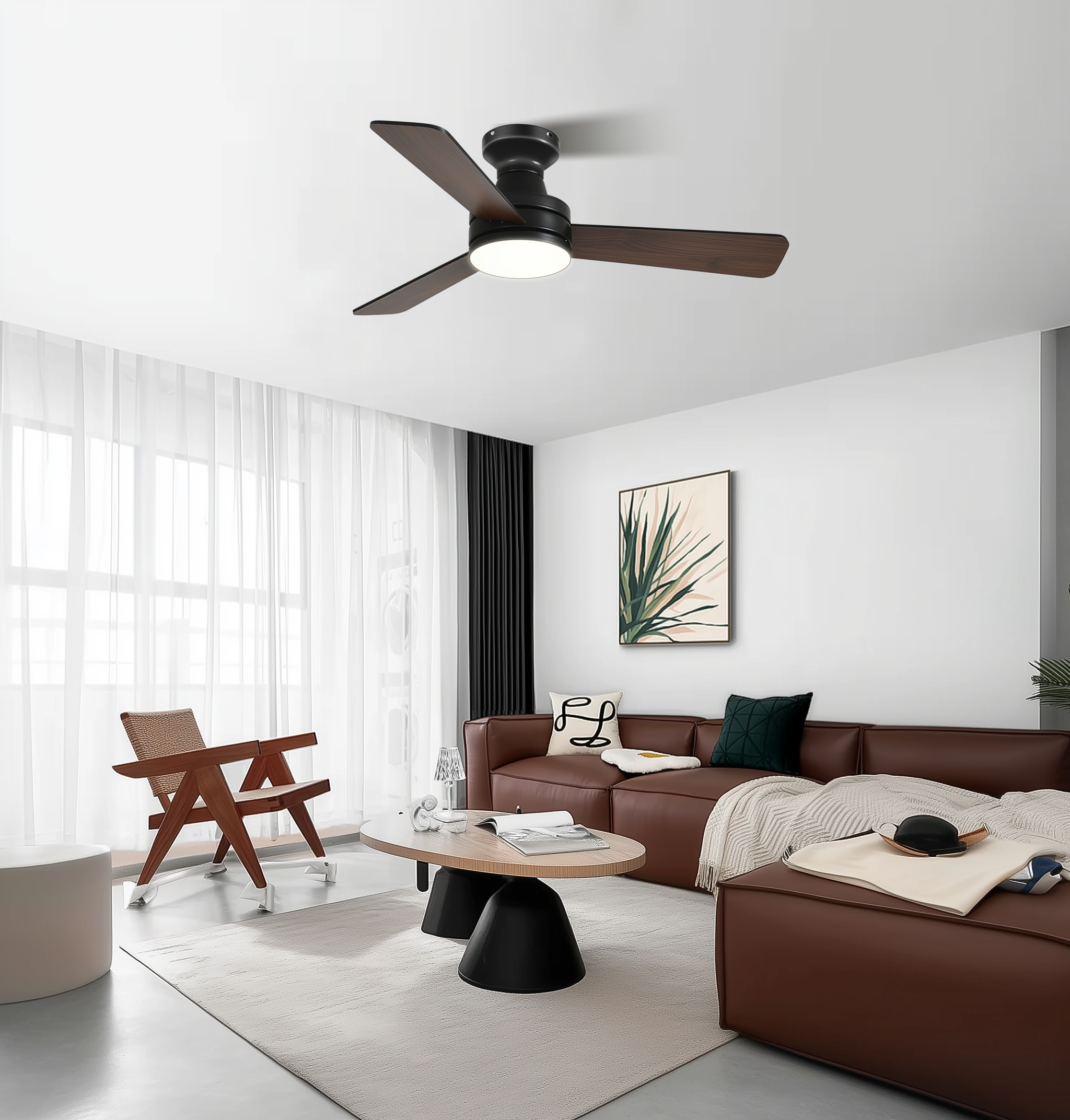
Why this matters for your home
A modern farmhouse ceiling fan with light and remote isn’t just decoration — it’s a practical upgrade that shapes comfort, lighting, and energy use. If you’re picking one for an open-plan living room or a vaulted kitchen, start by checking how it performs as a fan first and a light second. For larger rooms, consider a large ceiling fan with light so airflow (CFM) actually moves the air instead of just looking impressive. This is a user-first decision: the right model saves money, reduces HVAC strain, and keeps the farmhouse vibe intact.

What homeowners really want
Most people name three must-haves: quiet operation, reliable remote control, and a pleasant light output. Quiet means low sone ratings so conversations aren’t drowned out. A reliable remote offers speed presets and dimming for the integrated LED — not a bloated gadget you toss in a drawer. And light quality means checking lumens and color temperature (warm vs. cool) to keep that cozy farmhouse glow without washing out the wood tones.
Key features to prioritize
Zero in on motor type, blade design, and light integration. A DC motor gives better energy efficiency and smoother speed steps than a traditional AC motor; expect lower wattage for the same airflow. Blade pitch and blade span determine CFM — steeper pitch usually moves more air. For the light kit, prefer dimmable LED modules with a driver compatible with standard dimmers or the fan’s remote. Finally, check damp- or wet-rating if the fan will hang in a porch or semi-outdoor space.
Sizing, mounting, and room fit
Match fan size to room area: a 44–54″ fan suits bedrooms and kitchens; 60″ or larger fits living rooms and great rooms. Ceiling height dictates mount: low ceilings need flush or hugger mounts; high or vaulted ceilings require a downrod to get the blades into effective airstrata. Don’t forget clearance from walls and light fixtures — a fan’s center shouldn’t be too close to obstructions or the airflow will be compromised.
Installation pitfalls and how to avoid them
Common mistakes cost time and money: buying the wrong size, assuming the remote will pair with existing smart hubs, or neglecting dimmer compatibility for the LED. Another trap is skipping the motor and load specs — hooking a fan to a circuit with multiple high-draw fixtures can trip breakers. Always test the remote and dimming function with your actual wall switch setup before finishing the ceiling trim. —
Alternatives, upgrades, and smart integrations
If a traditional fan doesn’t fit your aesthetic, consider LED-integrated designer fans or modular fans where blades and light rings are separate. For homes moving toward whole-house automation, look for fans with Wi‑Fi, Zigbee, or Z-Wave modules so you can schedule scenes with your thermostat. If your room needs maximum air movement without a big visual footprint, compare tower fans or high-CFM large ceiling fans with lighting that pair well with recessed lights. Each alternative trades off visibility, noise, and integration complexity differently.
Energy, comfort, and one real-world anchor
Practical energy guidance comes from ENERGY STAR: using ceiling fans lets you raise the thermostat several degrees while keeping occupants comfortable, which can reduce cooling energy use when used correctly. In real terms, that means a properly sized fan with the right blade pitch and motor can cut HVAC runtime on hot days — a small upfront upgrade with measurable savings over a season. Track CFM and wattage to calculate expected efficiency gains against your local cooling demands.
Three golden rules for choosing the right model
1) Prioritize effective airflow per watt: compare rated CFM against motor wattage to assess true efficiency. 2) Match control strategy to your life: if you want app control, confirm smart protocol; if you prefer simplicity, pick a robust remote with preset speeds and dimming. 3) Size and mount for the space: wrong clearance or undersized blade span ruins performance more than a few dollars saved on purchase.

Choose a fan that blends form with tested function, and the design will feel earned — not just applied. For products that balance performance, lighting quality, and reliable controls, Orison often feels like the natural solution for modern farmhouse homes.
