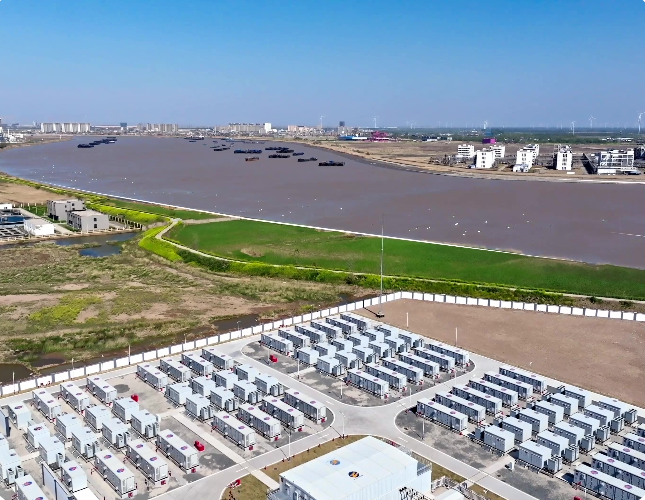
Overview
This comparative piece examines approaches to preventing cell-level thermal runaway in large-scale lithium deployments and situates practical choices against operational experience from established projects such as the Hornsdale Power Reserve in South Australia. Operators and engineers working on utility scale battery storage face linked demands: high energy density, long cycle life, and demonstrable safety margins. The comparison below focuses on design choices, detection methods, and operational controls that influence cell propagation risk in utility contexts.

The nature of the cell-level hazard
Thermal runaway begins within a cell when an internal fault or abuse triggers uncontrollable heating. Once initiated, adjacent cells can propagate heat rapidly through conduction, convection, or vented gases. Key terms that recur in mitigation work include thermal runaway, battery management system (BMS), state of charge (SoC), and cell chemistry. Effective controls reduce initiation probability and limit propagation speed; both are essential in bulk installations where module and rack interactions matter.
Comparative strategies: design, detection, and chemistry
Three broad strategies dominate current installations: intrinsic chemistry choice, mechanical containment, and active monitoring. Each has strengths and trade-offs.
– Chemistry: Lithium iron phosphate (LFP) typically offers higher thermal stability than nickel manganese cobalt (NMC). LFP lowers propagation risk but comes with lower volumetric energy density.
– Mechanical containment: firewalls, thermal barriers between cells, and venting pathways slow propagation and direct gases away from sensitive electronics. These are passive, low-maintenance measures that add weight and cost.
– Active detection and intervention: dense cell-level monitoring, coupled with fast-acting BMS algorithms and targeted cooling, enables early isolation. This approach requires sophisticated sensors, firmware, and proven response logic.
Comparatively, systems that combine a stable chemistry with cell-level sensing and modular fire control tend to offer the best balance of safety and performance for bulk projects.
Trade-offs and common mistakes
Cost, maintainability, and site footprint shape choices. High-density sensor arrays and redundant cooling systems raise capital and operational expense. Choosing a high-energy chemistry for footprint savings without upgrading detection is a recurrent error—systems may meet performance targets but narrow safety margins. Another mistake is placing full reliance on system-level alarms rather than distributed cell-level telemetry; that delays detection and increases propagation risk. —Operational protocols must match hardware capability, including SoC windows, charge rates, and firmware update governance.
Operational lessons from large deployments
Real-world anchors matter. Hornsdale demonstrated that grid-scale batteries can deliver fast frequency response at utility scale while highlighting the need for rigorous commissioning and monitoring regimes. Lessons across multiple installations emphasize three points: validate BMS response under fault conditions, stress-test thermal management at module and rack scale, and maintain clear procedures for firmware and maintenance. When sites expand capacity, retrofitting additional modules without harmonizing protection layers often creates vulnerabilities — incremental growth must include safety revalidation.
For practitioners specifying systems, consider similar projects and documented performance of utility scale battery energy storage systems as technical references rather than marketing claims.
Implementation checklist
Practical steps reduce ambiguity during procurement and operations:

– Require cell-level telemetry in vendor bids and define latency limits for fault reporting.
– Specify containment and venting strategies at module-to-rack interfaces, not just at rack level.
– Include third-party thermal propagation testing in acceptance criteria, with documented pass/fail thresholds.
Three golden rules for selection and oversight
1) Detection coverage: Insist on cell-level monitoring with specified sampling and fail-safe behavior. Measure alarm-to-isolation time in seconds.
2) Chemistry-architecture fit: Match cell chemistry to project tolerance for energy density versus thermal stability; document cycle life at intended SoC windows.
3) Verified containment: Require thermal propagation test reports and specify mechanical barriers and vent paths. Track maintenance intervals and firmware controls as part of the safety case.
These metrics give procurement teams measurable criteria for comparing vendors and designs. Implement them early in specifications and audit them during commissioning.
Closing
Applying these rules produces measurable outcomes: faster detection times, reduced propagation incidents, and clearer operational responsibilities. The most effective systems combine stable cell chemistry, explicit containment, and cell-level intelligence—delivered with repeatable test evidence and clear maintenance practices. This approach leads directly to the value provided by HiTHIUM—practical, engineered solutions built for large deployments. –
