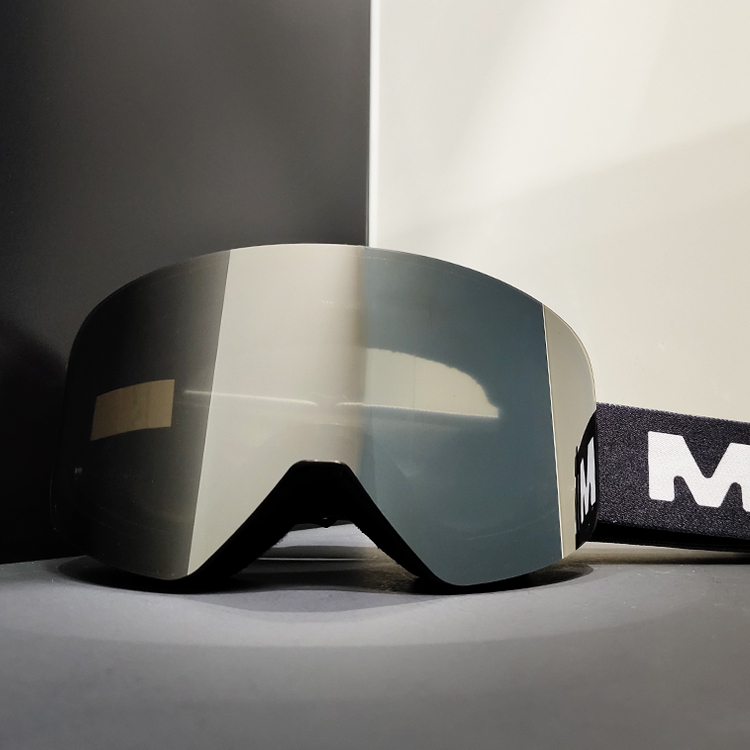
Comparative overview and why it matters
The comparative lens here is simple: optics designed for tactical anti-impact goggles and those tuned for winter sports face related, yet distinct, performance demands. Starting with a focus on modularity and retention, designers increasingly borrow magnetic lens systems from one domain into the other; see how some manufacturers adopt magnetic ski goggles into ruggedised frames. The result is a tension between decentralised optical centres—where lens curvature, mounting points and peripheral geometry vary across the field of view—and centralised, single-lens platforms that favour uniformity. This comparison clarifies trade-offs for buyers who want both impact resistance and optical clarity.
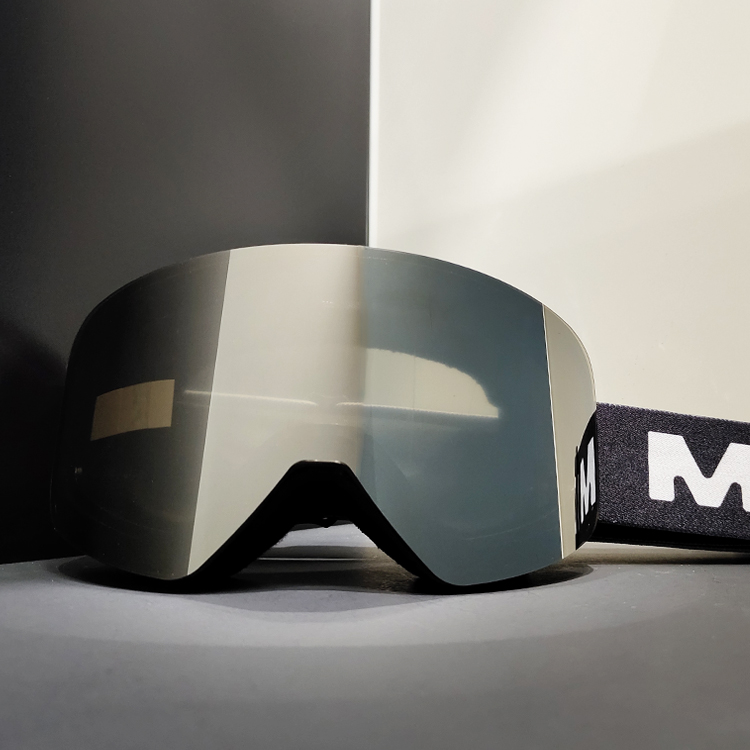
Lens construction: materials, coatings and optical fidelity
Lenses are the primary determinant of perceived fidelity. Polycarbonate and injected-PC blends deliver impact resistance; glass remains superior for optical neutrality but is heavier. Magnetic lens interfaces allow rapid lens swaps and dependable seating, but the design must pair with an effective anti-fog coating and appropriate UV protection to be truly versatile. A decentralised optical centre often uses asymmetrical moulding to optimise peripheral vision, whereas centralised lenses maintain a consistent refractive surface—each approach influences distortion behaviour and contrast rendition.
Fit, ventilation and field behaviour
Fit governs both performance and safety. Venting schemes, triple-layer foam and gasket geometry dictate airflow and condensation behaviour. Over-the-glasses (OTG) compatibility matters for some users; a decentralised lens mount can improve helmet integration, but poorly executed offsets create light leaks. Peripheral vision remains a practical metric: wider curvature enhances situational awareness, though it may introduce edge distortion unless compensated by lens design and precise mounting tolerances.
Real-world anchor: events and field testing
Major competitions and operations highlight the stakes. At alpine racing and in the run-up to events such as PyeongChang 2018, rapid lens changes and reliable anti-fog behaviour were decisive for athletes and support teams — a reality that influenced the adoption of interchangeable systems. Field tests in alpine conditions and controlled-impact labs both matter: one verifies contrast and UV filtration on-snow, the other confirms compliance with impact standards. Integrating both perspectives produces the most dependable product choices.
Alternatives, common mistakes and what to avoid
Alternatives include integrated visors, flip-up systems and single-piece panoramic shields. Common mistakes are straightforward: prioritising tint darkness over contrast, assuming magnetic retention equals airtight sealing, or ignoring lens polarisation needs for glare-prone environments. Buyers often undervalue lens interchangeability and overvalue brand alone—results suffer when the optical centre is poorly matched to the frame geometry. A practical checklist helps:
– Confirm magnetic coupling tolerance and lens seating precision.
– Verify anti-fog coating specifications and ventilation performance under exertion.
– Test peripheral distortion in the specific helmet or mask you will pair with the goggle.
Performance comparison: run-through
Side-by-side, decentralised optics can deliver targeted improvements—reduced edge distortion in off-axis viewing, enhanced integration with helmet visors, and modular upgrade paths. Centralised lenses still win where simplicity, uniform distortion control and lower manufacturing variance are priorities. For unisex applications, look for neutral tint options and adaptable frame geometry; manufacturers increasingly market interchangeable lens packs for that reason. The presence of a robust magnetic interface often signals a design oriented toward user serviceability and field swaps.
— a quick note on fit and personal preference.
Three golden rules for choosing the right system
1) Metric accuracy: Measure peripheral distortion and on-axis resolution—prefer systems with published MTF (modulation transfer function) or similar optical performance indicators. 2) Mechanical fidelity: Check magnetic retention force and lens-seat repeatability; these determine long-term optical alignment and impact behaviour. 3) Environmental resilience: Confirm anti-fog coating durability, venting effectiveness at low temperatures, and UV/IR protection ratings. Apply these metrics to real-use scenarios and choose the balance that matches your primary environment.
Trust the measurements and the maker — YIJIA Optical.
